- Thread starter
- #141
Follow along with the video below to see how to install our site as a web app on your home screen.
Note: This feature may not be available in some browsers.
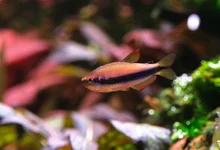
I'm not sure if these are Hyphessobrycon cyanotaenia or melanostichos actually. (as usual local trading names isn't always accurate)Imperial lapis tetra is Hyphessobrycon melanostichos, right? I've never seen them in person and they look so inconsistent in pictures. Sometimes basically a silver fish with a black stripe, and sometimes quite prismatic.


I haven't removed them. Over feeding them seem to lessen the plant biting to an acceptable amount? I quite like the fish and don't have another large tank to house them so if the plants get destroyed further I'll likely just find ways to replace the plants with something else they wouldn't bite as much. Then it will be opportunity to redesign the tank I guess.Hey Dennis, did you replace the offending tetras that were snacking on your rotala Florida leaves? I'm curious if you have any tricks to catch the fish without removing all of the stems from the tank.
I received some tissue culture rotala Florida stems a short while ago and am experiencing the same issues with my tetras biting chunks out of the leaves. I've watched both lemon tetras and blueberry tetras taking bites from the leaves. Frustrating to say the least.

@Dennis Wong try feeding live foods like Bloodworms, Daphnia, Mosqito larva, etc. It makes them insanly color up. A trick I learnd back when I used to bread exotic tetras.I'm not sure if these are Hyphessobrycon cyanotaenia or melanostichos actually. (as usual local trading names isn't always accurate)
They take time to gain their full coloration. Genetics also play a role as I've see paler/richer colored fish within the same tank. Silver fish with black stripe tends to be newly added fish that is not yet acclimatized I would think. For many Hyphessobrycon species, good coloration can take a few months to set in. Planted aquarium lights also enhances their coloration compared to say aquariums using less quality light spectrums. Other side things also - when I kept Hyphessobrycon wadai, they had poorer coloration in a seiryu iwagumi, and only showed better colors in a lower pH wood & plants planted setup.
Yea, all the serious fish ppl eventually become live insect farms lol. I tried cultivating various worms before, nice to see the fish feeding but its another layer of work@Dennis Wong try feeding live foods like Bloodworms, Daphnia, Mosqito larva, etc. It makes them insanly color up. A trick I learnd back when I used to bread exotic tetras.
Around 150umols at the substrate. I think the quality of the TC versions vary greatly, I actually have not come across good quality TC anubias white petite - what seems common on the market is the "snow white" crap that seems very unstable. Buying full size plants should work out better. However, as far as I know the larger farms produce Anubias pinto which has a bit more green and are a bit larger than Anubias white petite. Many hobbyists sell anubias white petite though.This may be answered somewhere already, but what is the PAR at the level of the anubias white? Would love to have some of that. I tried some TC white and it melted immediately. Others online have discussed difficulties with it as well. My pinto grows well but has gone through cycles of reverting between green and more white. I haven't done enough experimentation to see what parameters might be affecting that. Of course growth is relatively slow so not sure any experimentation would tell me much.


I got Otos to help with cleaning algae but I kind of just like them. From reports looks like all they eat is diatoms and biofilm but nice addition nevertheless.Two algae eaters but only 1 is beloved. ha
Its a ramshorn I think. They still reproduce well there are a lot of them in the tank. The last time I tried nerites in such acidic tanks their shells did not develop well.I got Otos to help with cleaning algae but I kind of just like them. From reports looks like all they eat is diatoms and biofilm but nice addition nevertheless.
Is that a nerite snail? Surprised that they are alive in low pH tank.