I’ve been wanting to do a tank for a while that focuses just on finnicky plants -erios, lud. panatal, tonina and the sorts. So this is my detailed journal of how I start my planting process all the way from cycling to planting, fertilizing, water changes and the pitsfalls, lighting and what processes work best for me.
Equipment:
Oase biomaster2- 350
Fluval Visi-white 60P tank
Fzone CO2 regulator and a 2.5lb CO2 tank
Week aqua L600Pro Series Light
Fzone Brite60 Light
Yugang reactor made using a 375 mm PC cooling reservoir - will post another journal detailing this.
CO2:
1.3 pH drop from a baseline of pH 6.8.
Aquasoil:
Three 5L bags of APT Feast
Cycling:
APT Feast being a high organic content soil - I like to cycle it for a full month at least using the dark start method before planting anything. This is even more important for me as I almost exclusively use tissue cultures for my plants. Because I will be injecting CO2, the tank was also getting injected with CO2 during its dark start. I know there’s opinion out there that it’s a waste and what not, but I think CO2 levels in the water might affect microbial ecosystem development in the long run, so I like to start off by exposing the microbial community of the tank to CO2 levels it will be seeing in the long run.
The water parameters 2 weeks after start dark cycle were as follows:
Total ammonia : 10 ppm+
Nitrite: 10 ppm+
Nitrate : unreadable as the nitrite levels were interfering with the API test. I eventually used a 25% dilution to read 30 ppm+ nitrates.
At this point I did a large (100%) water change to remove some ammonia and speed up the leaching process. The steeper the diffusion gradient between the soil and water the quicker the ammonia leaches, hence large water changes facilitates that.
After 4 weeks I did another water test and the parameters were similar as above. Proceeded to do another 100% water change.
After 5 weeks I did another water test and this time the parameters were:
Total Ammonia: 1 ppm
Nitrite: 2 ppm+
Nitrate: 40 ppm+
Decided to give it another week to see if the nitrites would drop to below 0.5 ppm.
One week later the nitrites had vanished. I did another 100% water change.
So it takes about 6 weeks to fully cycle a tank with APT Feast if you don’t use any old media or cycling aid.
Next step is to plant the tank. I wanted this tank to focus on mostly uncommon species:
1. Ludwigia Pantanal
2. Ludwigia Arcuata
3. Tonina fluviatilis
4. Rotala Macrandra
5. Macrandra Mini Red
6. Mayaca Fluviatilis
7. Rotala Florida
8. Rotala Bonsai
9. Ludwigia Cuba- white edge
10. Ludwigia Senegalensis
11. Lysimachia Parv. red
12. AR mini
13. Bacopa compacta white
14. Erio Vietnam
15. Erio Quinquangulare
16. Crypt Flamingo for my centre piece
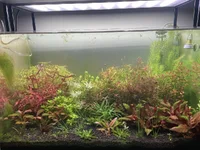
Here’s a photo after planting. Not all the species listed above are present in the photo but I did eventually add them once I was able to acquire them.
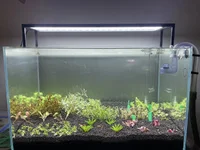
I’m also trying to make a carpet with buce needle leaf on the left side, we’ll see how that goes. I plant on planting clumps of ratnagiricum in the carpet once the carpet has settled in.
OK, so parameters after planting:
1. CO2: 1.3 pH drop from a baseline pH of 6.8. About 55-60 ppm possibly. The verify by making sure my drop checker is yellow before lights on. I turn on CO2 4 hours before lights on and turn it off 1 hour before lights off.
2. Lighting at 80% strength. I hadn’t hooked up the week aqua yet at that point so it’s just 80% on the fzone which would amount to about 60 umol of PAR at the substrate. After a week, I installed my weekaqua L series and increased the PAR to around 100 umol at the substrate. I’m a big fan of using high light (80-110) umol from day 1 of planting, I think this gives plants the best chance at fast growth. The faster the plants grow adapt and generate mass the higher my chances on skipping the diatom/GDA phase. Here’s an 8 gallon tank below where I used a 100W grow light from Day 1 of planting and you can see how the tank is algae free and growing rapidly at the 3 week mark.
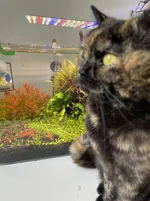
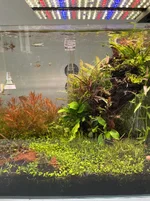
This method has worked really well for me, although the key to this method is to maintain very stable nitrate levels. Your nitrates could be anywhere between 0-30ppm, and it won’t matter as long as it is kept stable. A common mistake is to not replenish nitrates after a large water change.
3. Fertilizers:
APT 1 - 1.5 ml per day
4. Water parameters:
KH - 0dKH
Nitrate: 10 ppm
Phosphate: 0 ppm
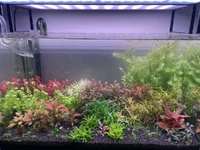
Here’s the tank now after 4 weeks of growth:
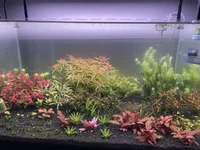
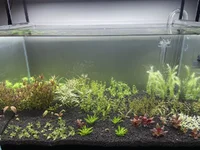
The macrandra on the left had been trimmed last week and replanted, they had almost reaching 80% of the tank height. The tonina at the back has settled in well, some diatoms on the lower leaves which I’m not worried about. Although I don’t think that’s where I’ll kepp the tonina long run. I might use it as a midground plant and maybe move the panatal where the tonina is. You can barely see the quinquangulare behind the AR mini, but they seemed to have settled down as well. I planted 6 crowns and lost 3 within the first 2 weeks. I suspect damage from transportation - they smelled like cooked spinach when I received them.
So as is evident from above, even though I’m supplying higher levels of lighting, diatoms and GDA haven’t really taken a hold yet. The key has been regular water changes to remove detritus produced by the ramshorns, keep a stable nitrate level of 10ppm, stable CO2 at 50+ppm and good plant husbandry. I always make a point of trimming away older and emersed leaves so they don’t attract algae. The ludwigia white is actually emersed. I have removed all of its emersed leaves except the ones from the top 2 internodes and as soon as I will see sideshoots grow and develop past the 2nd internode, I will trim them and replant them and uproot the emersed stem and toss it. The plant arrangment is a little “block-like” as of now, but this isn’t really the final arrangement. I prefer to grow the plants out in a rough layout before I arrange them once they’ve all taken off.
Thank you for taking the time to read this. I will add to it as the tank develops in the upcoming weeks.
Equipment:
Oase biomaster2- 350
Fluval Visi-white 60P tank
Fzone CO2 regulator and a 2.5lb CO2 tank
Week aqua L600Pro Series Light
Fzone Brite60 Light
Yugang reactor made using a 375 mm PC cooling reservoir - will post another journal detailing this.
CO2:
1.3 pH drop from a baseline of pH 6.8.
Aquasoil:
Three 5L bags of APT Feast
Cycling:
APT Feast being a high organic content soil - I like to cycle it for a full month at least using the dark start method before planting anything. This is even more important for me as I almost exclusively use tissue cultures for my plants. Because I will be injecting CO2, the tank was also getting injected with CO2 during its dark start. I know there’s opinion out there that it’s a waste and what not, but I think CO2 levels in the water might affect microbial ecosystem development in the long run, so I like to start off by exposing the microbial community of the tank to CO2 levels it will be seeing in the long run.
The water parameters 2 weeks after start dark cycle were as follows:
Total ammonia : 10 ppm+
Nitrite: 10 ppm+
Nitrate : unreadable as the nitrite levels were interfering with the API test. I eventually used a 25% dilution to read 30 ppm+ nitrates.
At this point I did a large (100%) water change to remove some ammonia and speed up the leaching process. The steeper the diffusion gradient between the soil and water the quicker the ammonia leaches, hence large water changes facilitates that.
After 4 weeks I did another water test and the parameters were similar as above. Proceeded to do another 100% water change.
After 5 weeks I did another water test and this time the parameters were:
Total Ammonia: 1 ppm
Nitrite: 2 ppm+
Nitrate: 40 ppm+
Decided to give it another week to see if the nitrites would drop to below 0.5 ppm.
One week later the nitrites had vanished. I did another 100% water change.
So it takes about 6 weeks to fully cycle a tank with APT Feast if you don’t use any old media or cycling aid.
Next step is to plant the tank. I wanted this tank to focus on mostly uncommon species:
1. Ludwigia Pantanal
2. Ludwigia Arcuata
3. Tonina fluviatilis
4. Rotala Macrandra
5. Macrandra Mini Red
6. Mayaca Fluviatilis
7. Rotala Florida
8. Rotala Bonsai
9. Ludwigia Cuba- white edge
10. Ludwigia Senegalensis
11. Lysimachia Parv. red
12. AR mini
13. Bacopa compacta white
14. Erio Vietnam
15. Erio Quinquangulare
16. Crypt Flamingo for my centre piece
Here’s a photo after planting. Not all the species listed above are present in the photo but I did eventually add them once I was able to acquire them.
I’m also trying to make a carpet with buce needle leaf on the left side, we’ll see how that goes. I plant on planting clumps of ratnagiricum in the carpet once the carpet has settled in.
OK, so parameters after planting:
1. CO2: 1.3 pH drop from a baseline pH of 6.8. About 55-60 ppm possibly. The verify by making sure my drop checker is yellow before lights on. I turn on CO2 4 hours before lights on and turn it off 1 hour before lights off.
2. Lighting at 80% strength. I hadn’t hooked up the week aqua yet at that point so it’s just 80% on the fzone which would amount to about 60 umol of PAR at the substrate. After a week, I installed my weekaqua L series and increased the PAR to around 100 umol at the substrate. I’m a big fan of using high light (80-110) umol from day 1 of planting, I think this gives plants the best chance at fast growth. The faster the plants grow adapt and generate mass the higher my chances on skipping the diatom/GDA phase. Here’s an 8 gallon tank below where I used a 100W grow light from Day 1 of planting and you can see how the tank is algae free and growing rapidly at the 3 week mark.
This method has worked really well for me, although the key to this method is to maintain very stable nitrate levels. Your nitrates could be anywhere between 0-30ppm, and it won’t matter as long as it is kept stable. A common mistake is to not replenish nitrates after a large water change.
3. Fertilizers:
APT 1 - 1.5 ml per day
4. Water parameters:
KH - 0dKH
Nitrate: 10 ppm
Phosphate: 0 ppm
Here’s the tank now after 4 weeks of growth:
The macrandra on the left had been trimmed last week and replanted, they had almost reaching 80% of the tank height. The tonina at the back has settled in well, some diatoms on the lower leaves which I’m not worried about. Although I don’t think that’s where I’ll kepp the tonina long run. I might use it as a midground plant and maybe move the panatal where the tonina is. You can barely see the quinquangulare behind the AR mini, but they seemed to have settled down as well. I planted 6 crowns and lost 3 within the first 2 weeks. I suspect damage from transportation - they smelled like cooked spinach when I received them.
So as is evident from above, even though I’m supplying higher levels of lighting, diatoms and GDA haven’t really taken a hold yet. The key has been regular water changes to remove detritus produced by the ramshorns, keep a stable nitrate level of 10ppm, stable CO2 at 50+ppm and good plant husbandry. I always make a point of trimming away older and emersed leaves so they don’t attract algae. The ludwigia white is actually emersed. I have removed all of its emersed leaves except the ones from the top 2 internodes and as soon as I will see sideshoots grow and develop past the 2nd internode, I will trim them and replant them and uproot the emersed stem and toss it. The plant arrangment is a little “block-like” as of now, but this isn’t really the final arrangement. I prefer to grow the plants out in a rough layout before I arrange them once they’ve all taken off.
Thank you for taking the time to read this. I will add to it as the tank develops in the upcoming weeks.
Attachments
Last edited: