
Welcome to ScapeCrunch
We are ScapeCrunch, the place where planted aquarium hobbyists come to build relationships and support each other. When you're tired of doom scrolling, you've found your home here.
Social Feed

Journal Mini Yugang - My experience
This journal documents my thought process and design decisions for building mini yugang reactors for tanks below 20 gallons/60P.
If this is your first time learning about a yugang reactor, head over to this article:
Yugang CO2 Reactor - A Guide
One of the challenges with the yugang reactor is that they are tough to build for smaller tanks due to material availability. But that issue was solved in this thread below:
Yugang Reactors for Smaller Tanks
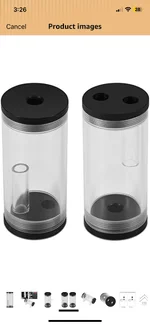
After reading the thread above, I thought that the PC cooling reservoir would be a great idea for three reasons:
Challenges with the mini yugang and how to resolve them:
I hope the reader will find my experience helpful in designing their own mini yugang. Thank you for reading.
If this is your first time learning about a yugang reactor, head over to this article:
Yugang CO2 Reactor - A Guide
One of the challenges with the yugang reactor is that they are tough to build for smaller tanks due to material availability. But that issue was solved in this thread below:
Yugang Reactors for Smaller Tanks
After reading the thread above, I thought that the PC cooling reservoir would be a great idea for three reasons:
- You will be able to disassemble it for cleanup
- It’s see-through, so you can adjust flow as required, as the flow will decrease over time from filter clog-up. This is sort of important for mini yugangs as significant flow reductions could lead to a slower rate of pH drop. This is discussed in detail later in the journal.
- Its outflow is off-centre and the cylinder is rotatable as shown in the photo below, thus you can increase or decrease pH drop based on your tank size. This feature is particularly important as the PC cooling reservoirs come in fixed sizes, so the only real way to adjust pH drop is by rotating the cylinder to increase or decrease CO2 absorption.
Challenges with the mini yugang and how to resolve them:
- Low volume: I have used a 310 mm PC cooling reservoir, with a usable diameter of 40mm. This means that during operation at full capacity the volume of water in the reactor is pretty low; about 185ml. This is a little problematic as the low mass flow rate requirement of the mini yugang coupled with the low volume means that only a small amount of water gets injected with CO2 at any point in time. This leads to the pH drop being very slow for a tank size of 20 gallons. I had designed my yugang for a pH drop of 1.4 and it takes me about 5-6 hours to achieve this. The way to resolve this issue would be by using a reactor with a great length (to be able to afford larger mass flow rates) and a larger volume, but this would mean that you would have a tough time running the reactor in overflow mode as the CO2 gas pocket would have to be very small due to the bigger reactor size. The other solution is to start injecting early like I do. So to conclude, the “rate of pH drop” is dependent on reactor volume, mass flow rate and the size of the fish tank. So keep this in mind if you’re trying to use a mini yugang for tanks bigger than 20 gallons.
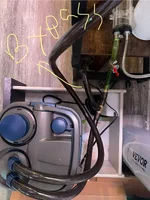
- Usually small volumes of air being purged into the reactor isn’t an issue as yugang points out in his article but if the filter is purging out massive bubbles of air frequently then this most certainly will affect reactor operation. If you own one of the older biomasters one of the issues you’d encounter is the filter purging air into the reactor. This happens in two cases; if you don’t have a bypass or if the tee joint at the bypass is oriented incorrectly. This is why my suggestion would be to install a bypass, as it just gives you more control over the situation. So, what is then the correct tee joint orientation? If you look at the photo below, you’ll see how the bull head of the tee joint is pointing upwards against gravity and that the bypass is connected to the bull head while the reactor inflow is connected to the parallel down-flow. This is key because the bypass being connected to the upwards facing bull head ensures that any bubbles being purged from the filter is not entering the reactor; this happens as bubbles have an affinity to move upwards. In this case, the filter purges air and the bubbles shoot straight into the bypass and out into the tank without entering the reactor and disrupting reactor performance.
I hope the reader will find my experience helpful in designing their own mini yugang. Thank you for reading.
6 Replies
·
1168 views


Staff member
Supporting
I Donated 2026
Rockstar


- We grow super interesting plants here
- Everybody has extra tank / filter / heaters around they've been meaning to get around to building into a farm tank...

It's easy!
TRIMMERS
Next time you have a big trim planned, or have just done: post a pic here of the plants!
Include the
- species name
- date cut / uprooted
- expiration / you-will-toss after date
- your zip code
TAKERS
Check cost of FedEx /UPS to your own address, and send the trimmer a PM with the offer to pay shipping


37 Replies
·
2269 views


Staff member
I Donated 2026
Founding Member
This is the future home for the announcements when someone obtains an achievement badge. Let the games begin!
2066 Replies
·
84908 views

Hi guys, I've been wondering about something.
I'm not really an aquascaper. I'm more of a rare plant collector, and I'm mostly into emersed plants and outdoor wildlife ponds. My aquarium is usually just a place where I experiment with different plants I've collected and stuff. But I'm interested in working at an aquascaping store one day, so I'm wondering what kind of things I should know.
I've watched some of Green Aqua's critiques of viewers' aquariums, but honestly, I find some of Tommy's comments a bit strange sometimes. He criticises certain things for being this or that, and so on. It got me thinking if there is a double standard here? Like, if Mr. Amano had made exactly the same aquascape, would people have had a completely different opinion? Would they see it as some kind of masterpiece?
It kind of reminds me of classical piano competitions, too. Imagine if a composer entered a competition and played their own compositions, but the judges didn't know who they were. They would get a bad score for sure, because music technique in their time wasn’t the same as now.
Now back to my question: Are there actually set rules in aquascaping, like ADA principles or other standards? And at what point do we get to develop our own styles rather than follow certain rules?
5 Replies
·
74 views

Hey everyone,
I'm Josh (JCole on most of the reef forums). I've been in the saltwater side of the hobby for over 20 years, mostly running Acropora-dominant systems. I'm officially getting out of reef keeping and converting my current tank to a planted freshwater tank. I'll be honest up front: I know almost nothing about planted tanks. So I figured the best move was to introduce myself, start a build thread, and beg for help LOL.
A little background so you know a bit about my previous addiction!
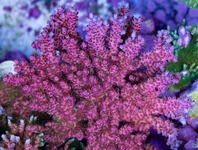
For a long stretch, my main tank was a 150-gallon Acro tank plumbed to a sump, a 20-gallon chaeto refugium, and a frag tank out in the garage. I crashed it in late 2020, lost over 70 Acros, and kept about six. Rebuilt it and kept going.
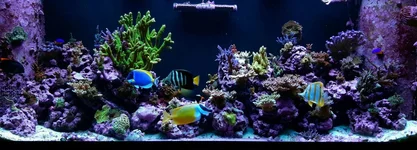
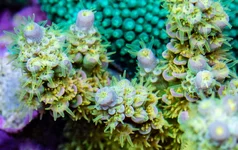
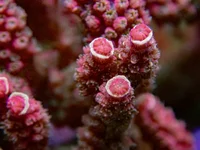
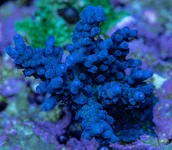
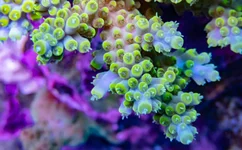
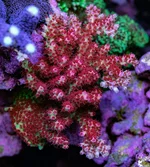
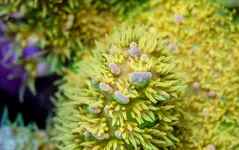
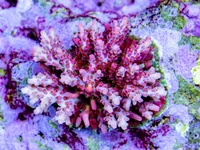
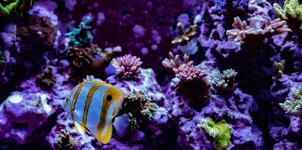
I eventually outgrew the 150 with coral colonies and needed to upgrade. My next tank was a 480-gallon acrylic peninsula, 8'x4'x2', with a 300-gallon stock tank sump in the garage.
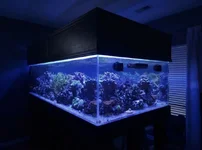
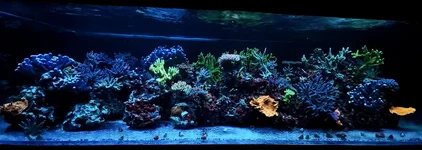
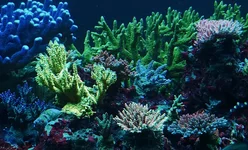
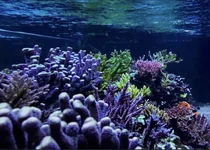
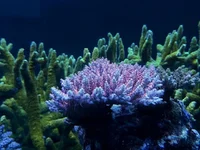
The aquarium was a dream aquarium of mine, but with having a full time job running a company with 3 boys in travel ball baseball, it consumed all of my time and I just could not give the tank what it actually needed and deserved. I eventually reset it, built my own cement rock and shelves, and sold the whole system in early 2025.
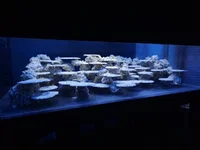
After that, I downsized to a Marineland 180 (72x24x24) in the same room. This is the tank I'm converting to freshwater.
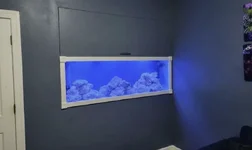
WHERE I'M AT RIGHT NOW
Any help or guidance would be appreciated.
Thank you!!!
Will be continued!
I'm Josh (JCole on most of the reef forums). I've been in the saltwater side of the hobby for over 20 years, mostly running Acropora-dominant systems. I'm officially getting out of reef keeping and converting my current tank to a planted freshwater tank. I'll be honest up front: I know almost nothing about planted tanks. So I figured the best move was to introduce myself, start a build thread, and beg for help LOL.
A little background so you know a bit about my previous addiction!
For a long stretch, my main tank was a 150-gallon Acro tank plumbed to a sump, a 20-gallon chaeto refugium, and a frag tank out in the garage. I crashed it in late 2020, lost over 70 Acros, and kept about six. Rebuilt it and kept going.
I eventually outgrew the 150 with coral colonies and needed to upgrade. My next tank was a 480-gallon acrylic peninsula, 8'x4'x2', with a 300-gallon stock tank sump in the garage.
The aquarium was a dream aquarium of mine, but with having a full time job running a company with 3 boys in travel ball baseball, it consumed all of my time and I just could not give the tank what it actually needed and deserved. I eventually reset it, built my own cement rock and shelves, and sold the whole system in early 2025.
After that, I downsized to a Marineland 180 (72x24x24) in the same room. This is the tank I'm converting to freshwater.
WHERE I'M AT RIGHT NOW
- Tank: Marineland 180, 72x24x24, glass.
- Goal: High-tech planted. CO2, good light, fertilizers, the whole thing.
- Cleaning: Done. I stripped the tank and sump with bleach and muriatic acid to get all the coralline algae off. It's clean and ready for water.
- Sump: My Trigger Triton 44 sump is already set up and staying. I'm not going canister right now.
- Controller: I've run an Apex for about 8 years, and I also wrote my own Raspberry Pi controller app that talks to the Apex and my Kasa, Shelly, and Jebao gear.
- Lights: I pulled the halides and kept the pendants. For now, each pendant has a 120V LED grow light bulb in it.
- Substrate: I have 19 bags of CaribSea Eco-Complete Planted ready to go.
- CO2 with a sump: I know a sump gasses off CO2. Since I'm keeping mine, what tips do you have to keep the loss down (lower the return, cover the sump, change the overflow, anything else)?
- CO2 control: I can run a solenoid and a pH probe off the Apex or my own app. Do you control CO2 by pH, by a timer, or both? Is a drop checker still the thing to trust? And what do you use to actually get the CO2 into 180 gallons—an inline reactor on the return or diffusers? What safeguards do you run so a stuck solenoid doesn't gas the fish overnight?
- Lighting: Are LED grow bulbs in the pendants enough for a high-tech 72" long, 24" deep tank, or is that a stopgap? If I upgrade, what would you put over it?
- Substrate and hardscape: I read that people put lava rock in filter bags on the bottom to build up hills and slopes so the deep rooting plants get more depth. Is that the way to do it, and how deep should the Eco-Complete be on top? Is 19 bags enough for what I'm trying to do?
- Fertilizers: EI or lean dosing for a first-timer? I'm used to dosing two-part and testing a lot, so numbers do not scare me.
- Plants and fish: I want to start with beginner plants, but I'm not scared to try the harder stuff. Acros taught me patience, so I'd like to work up to the more advanced plants. What would you start with in a 72" high-tech tank, and what would you add later? And what fish do well in that setup?
- Water: I've always run RODI for the reef. For planted, do I use straight tap, RO with remineralizer, or a blend? Which GH and KH numbers should I be shooting for?
- Cycling: Plants change how you cycle, right? What's the order of operations?
Any help or guidance would be appreciated.
Thank you!!!
Will be continued!
118 Replies
·
2765 views

Supporting
I Donated 2026
Since these are starting, here's a thread.
Starbond, the makers of Cyanocrylate Adhesives, has a few items on sale. Black Friday Starts Early 2026 | Starbond. I'm a fan of their Clog Prevention Stoppers. There are some sanding discs on sale for the woodworkers in the crowd too.
Starbond, the makers of Cyanocrylate Adhesives, has a few items on sale. Black Friday Starts Early 2026 | Starbond. I'm a fan of their Clog Prevention Stoppers. There are some sanding discs on sale for the woodworkers in the crowd too.
25 Replies
·
1525 views

AquaGirls
Made a massively stupid late night mistake. I needed to reset the soil in my buce collection tank and tapped the edge of the tank with a glass pyrex measuring cup (I'm getting a plastic one today).
I started working around 11pm after my mom duties were done for the evening, and work continued well into the early morning so I was pulling an all-nighter to get this done. In the heat of my exhaustion, I was absentmindedly going through the motions of refilling the tank when it happened.
Now I have a pretty sizeable scallop chip in the top front panel of a tank that is only a few months old. This is the first time I've ever chipped one of my tanks. Thankfully it's smack dab in the middle of the panel, so i'm not terribly worried as scallop chips rarely splinter or spread into a crack. I have the water level an inch below it to reduce any pressure stress, and am going to buy a windshield repair kit and attempt to fix it since the shard came off in a mostly solid piece that I was able to recover.
Once I get the kit and free time, I'll post pictures of the repair process to document here. I know this is probably a somewhat controversial idea, but luckily this tank is in my tiled floor basement which has an adjacent unfinished room with a floor drain. Of course I would rather not have the tank spontaneously spring a leak, but taking that into consideration and the fact that the glass is 10mm thick for 40 gallons of water, it's not worth the money or hassle to replace right now.

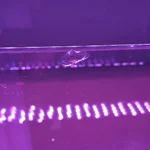
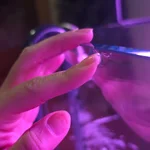
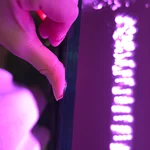
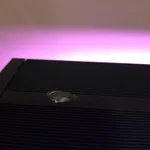
I started working around 11pm after my mom duties were done for the evening, and work continued well into the early morning so I was pulling an all-nighter to get this done. In the heat of my exhaustion, I was absentmindedly going through the motions of refilling the tank when it happened.
Now I have a pretty sizeable scallop chip in the top front panel of a tank that is only a few months old. This is the first time I've ever chipped one of my tanks. Thankfully it's smack dab in the middle of the panel, so i'm not terribly worried as scallop chips rarely splinter or spread into a crack. I have the water level an inch below it to reduce any pressure stress, and am going to buy a windshield repair kit and attempt to fix it since the shard came off in a mostly solid piece that I was able to recover.
Once I get the kit and free time, I'll post pictures of the repair process to document here. I know this is probably a somewhat controversial idea, but luckily this tank is in my tiled floor basement which has an adjacent unfinished room with a floor drain. Of course I would rather not have the tank spontaneously spring a leak, but taking that into consideration and the fact that the glass is 10mm thick for 40 gallons of water, it's not worth the money or hassle to replace right now.
12 Replies
·
886 views


Saw a couple of you guys fighting for your lives over on Reddit. Valiant effort, but it’s just not the space for this hobby. Reddit will always be an open forum catering to the lowest common denominator. Nobody wants to see what years of focused practice produce, and will write off any decent aquascape or skilled plant husbandry as either having “thousands of dollars to spend” or just gatekeeping and elitism. Just let them have it. There’s no meaningful discussion to be had over there anyway.
42 Replies
·
579 views

In another thread I was discussing the tanks I have and it hit me, I might have too many. Then I see posts from others with multiple tanks too and I don’t feel so bad. I don’t know if multiple tank syndrome is a thing, or if I have it. I just want to know if I am normal…
Show many how many tanks you have and let’s see.
RULES:
1) Show how many tanks you have with ONLY 1 picture per tank.
2) The tanks must be currently running.
3) You must be responsible for the tank (it’s OK if you don’t personally do the maintenance.)
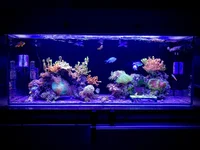
65 gallon mixed reef tank
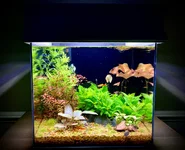
20 gallon planted tank (soon to be replace with a 50g)
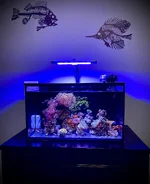
20 gallon mixed reef tank (youngest son’s tank)
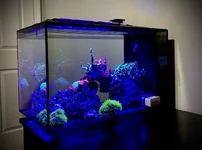
13.5 gallon mixed reef tank (oldest son’s tank)
8 gallon zoa reef tank - my work tank
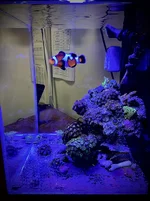
6 gallon planted tank
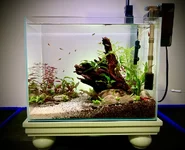
6 gallon coral frag grow out tank (To be broken down soon. I am not happy with it.)
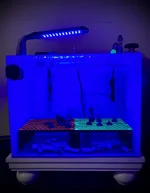
LETS SEE WHAT YOU HAVE!
Show many how many tanks you have and let’s see.
RULES:
1) Show how many tanks you have with ONLY 1 picture per tank.
2) The tanks must be currently running.
3) You must be responsible for the tank (it’s OK if you don’t personally do the maintenance.)
65 gallon mixed reef tank
20 gallon planted tank (soon to be replace with a 50g)
20 gallon mixed reef tank (youngest son’s tank)
13.5 gallon mixed reef tank (oldest son’s tank)
8 gallon zoa reef tank - my work tank
6 gallon planted tank
6 gallon coral frag grow out tank (To be broken down soon. I am not happy with it.)
LETS SEE WHAT YOU HAVE!
0 Replies
·
24 views


I bought some Rotala - Narrow Leaf for upcoming scape. Currently growing like a weed in grow out tank. However, I wanted a vertical growth red/orange plant and this stuff grows in every direction but up. Not sure I want to use it now. Is this normal for this variety or is it not liking the tank conditions (Fluval 4.0, CO2, Controsoil, APT3)? Is there another red(ish) plant that is fine-leafed and grows more upright. Am looking at Rotala - Blood Red. The pics appear more vertical.
3 Replies
·
36 views

I Donated 2026
Hello all. I just glued the hardscape in my new tank today. Tomorrow I’ll add substrate. And I’m up against the bane of my aquascaping existence. How to separate aquasoil from sand. I have plenty of rocks and filter floss. I even bought some flexible plastic barrier that I can’t get myself to actually use. Do any of you have a method that works for you you can share?
4 Replies
·
55 views