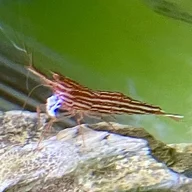


Stoopid reply from me, but of course Amano are also Caridina.they're still a must-have for all of my planted tanks. the only tanks that don't get amanos are my caridina tanks
You can't take the pedant out of the man !
Follow along with the video below to see how to install our site as a web app on your home screen.
Note: This feature may not be available in some browsers.
Stoopid reply from me, but of course Amano are also Caridina.they're still a must-have for all of my planted tanks. the only tanks that don't get amanos are my caridina tanks

I enjoy shrimp in general. I've never been sure they did that much, but I just think they're cool. So I'm with you.Personally I love them. Dont know why. I just find them great.
What's the AGA? I dont know it - I just went from a couple of videos, what little there is online, and trial and errorI enjoy shrimp in general. I've never been sure they did that much, but I just think they're cool. So I'm with you.
If you are a member of the AGA, there is a guy who did a great presentation on breeding Amanos. You can look at that, but if you have successfully raised them, you are probably already ahead of the game.


 www.aquatic-gardeners.org

What's the AGA? I dont know it
this month’s issue of AGA has a nice scientific write up by Eduardo Fonseca from Brazil about the process of melting.

 as well as all four issues for that year
  and streaming video archives of AGA Annual Conference presentations dating back to Y2k


My tank is cycled but not planted yet

 shrimpybusiness.com

 www.shrimplyexplained.com
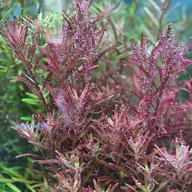
In my limited experience I think an algae clean up crew is a hype. I had Amanos in my tank with tons of hair algae and they did virtually nothing. I don’t have moss so maybe they play a roll there. Currently they are more of a nuisance for me since they eat/damage Buce tissue culture. I have Otos, but I just find them a nice addition in general not for any clean up reasons. My take on cleanup crew after watching lot of experienced folks talking about it is that they seem to help during the diatoms phase which usually self resolves anyway. Lot of hype on videos might be because it is a win win for people producing content, they have new videos to make, more info to share and if they are supported by a fish store they can sell more. Just my 2 cents.wanted to give them a go this time because there’s definitely been an uptick in the amount of people emphasizing good cleanup crews,

I believed this for years, while also having a large neocaridina colony in every tank for fun. Then I got apistos, and they taught the diamond tetras to hunt shrimp and they decimated the population and sent the rest into hiding. Then the apistos had babies and I went a couple of weeks with a little extra feeding and no water changes. Suddenly I had a huge issue with particulate organic matter like I have never experienced before! Obviously the overfeeding and lack of maintenance were major self-inflicted contributing factors, but I have been accustomed to having a little bit of wiggle room there. I think the shrimp colony provided that buffer and without them I need to be much more mindful about that kind of stuff.In my limited experience I think an algae clean up crew is a hype.
I do think those things are all mandatory in a way that a clean up crew isn't, but I'll never take them for granted again.I think what helps is plant mass, stability, microbiome, light planning and horticulture which all will tip the favor towards plants and against algae.
No experience with them, good to know though.large neocaridina colony

So above is what I posted 8 months ago. My experience and views have changed. I started out with 10-12 Amanos in my first 49g tank, and they of course, started out small. I think things went well for that first 6 months, but it seems the bigger they get, the less value they add and more nuisance they become. I have a lot of AR Mini in that tank. As others here have commented recently (as well as reports on Reddit) Amanos apparently love AR Mini. It may be something they do as they're bigger or perhaps when other food sources in the tank fall off, but over the last few months I too, began seeing my AR Mini get decimated. I initially thought it was age and plant health do to something I was missing, but like others, I've caught the Amanos in the act of chowing down on the leaves. By this time, I only had 4 large Amanos left in the tank, so I moved them to a newer tank still going through early algae struggles but had no AR Mini. So far AR leaf decimation has significantly slowed, if not completely stopped. Meanwhile, there's a quickly growing population of wild Neocaridina in the same tank that are staying quite busy feeding on algae, and whatever else, among my Phoenix moss and dwarf hairgrass. I think I will stick to those going forward and skip the Amanos.Interesting perspective on the Amano.
As a newcomer to the hobby in the last year, I can say that my experience with the talk about them has been much the opposite. When I began studying, I saw them mentioned constantly as a great method to help control algae. As a result, they were absolutely a key part of my first scape along with some cherry shrimp. The cherry quickly disappeared and I found a few of those on the floor around the aquarium but after 6 months, I have pretty much all the Amano shrimp still going strong. They and a small number of nerite snails do great on the algae and I very rarely add any supplemental food for them.


always soon after adding them to a new tank, and he felt it was the shift in water parameters

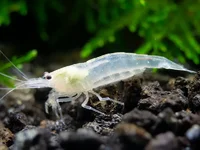
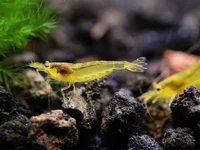
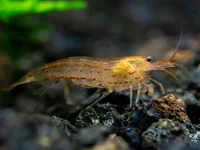 a great contrast and you can safely mix with neocaradinas without crossbreeding
I did have issues with a few escaping over the first week or so after I added them to my first aquarium but eventually they seemed happy to stay put. That could have simply been because the tank was still maturing. No issues with CO2. The remaining 4 I have would still be in that tank if it weren't for them devouring the AR. Since they were moved to the 25g tank, I do see the bullying behavior big time when I add shrimp treats, not just to the neocaridinas but to each other. It's funny though, sometimes the neos will join en masse to drive one off a pellet.I am very much considering Amano’s for my current build. Maybe because I have binge-watched a lot of Youtube videos the last six months, I do see Amano shrimp advocated for a lot as part of the trifecta clean-up crew (along with Nerites (Clithon sp.), and Otos, which I am committed to. I had them in my last larger tank, and they did great).
One tip I picked up a few months ago for adding Amano’s to a tank was to cover the corners for the first few days. There is a GA video (can’t find it at the moment, sorry) where Tomi mentioned they had previously had several crispy Amano’s end up on the gallery floor, but that it was always soon after adding them to a new tank, and he felt it was the shift in water parameters that sent the Amano’s out exploring. They do this naturally in the wild. If environmental parameters suddenly change, or they lack food resources, they scurry around on land moving from pool-to-pool to find a more suitable environment (which of course they are unlikely to find in your living room). His recommendation was to cover the corners of the tank while they settle in for the first few days, as that is typically where they escape from. This isn’t quite the video I was looking for, but he does address the escaping issue, and solution, in this video at the 6:49 mark:
Green Aqua - ...escaping Amanos
I am hoping that tactic works, as I would rather look at cling film on my tank for a few days, than algae covered leaves and substrate soon after planting. While I know they are not a substitute for good tank husbandry, I do hope they can at least give an assist with keeping the Fissidens and Cyperus clean.
I have had some hesitation in regards to using Amano shrimp though, including their predilection for Nymphoides ‘Taiwan’, and Alternanthera reineckii. Also, their propensity, when larger adults, for bullying shy or smaller fish. Additionally, some have suggested they have a possible lowish tolerance for CO2 levels in the tank.
I have seen various theories in the aquascaping universe regarding why Amanos seem to prefer Nymphoides and AR plants in particular, but there are many scapers out there that have had experience with them demolishing those plants. Some suggest it is related to plant health, or underfeeding the shrimp once the tank is ‘clean’, and others have presumed it is due to the softer texture of the leaves of those plants specifically that Amano’s find irresistible. As many as have reported issues with Amanos and those plants, I presume the latter. Those plants are just tasty. We have a lot more plants available in this hobby these days, so, for now, I will skip the Nymphoides, and AR. I do love how Nymphoides looks in a large tank, though.
Bullying does appear to be a problem as they grow larger. I have seen everything from them simply absconding with food, which can make feeding your bottom-feeders a bit tricky, to outright attacking some (at least debilitated, but still alive) fish, Neocaridinia, and fry. That said, I have also seen Ramshorns swarming a weak shrimp post-molt, that is still alive, too! As my 150 is planned to mostly be small fish species, I probably won’t be adding the suggested 1 Amano per 5 liters of water!
As for CO2 tolerance, I don’t like the idea of any livestock ‘living on the edge’ so to speak. I know that typically for planted tanks, we generally throw around the target CO2 level for the tank as being 30ppm, which is generally considered the upper safe limit for livestock. I am curious, for those that DO keep Amanos, do you run your tanks at 30ppm, or perhaps a little lower for livestock safety, providing you reach your desired pH level drop for your tank?
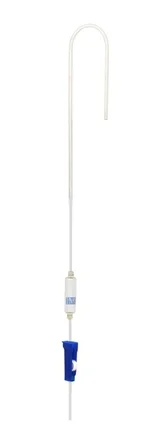
All shrimps benefit from gradual acclimation to new water using drip acclimation
If you like gadgets, this is ridiculously handy
View attachment 16215

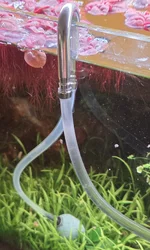
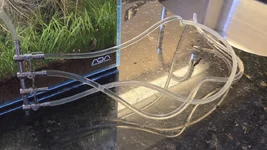
and never even thought to use IV drip line until after I had this put together