Welcome to ScapeCrunch

We are ScapeCrunch, the place where planted aquarium hobbyists come to build relationships and support each other. When you're tired of doom scrolling, you've found your home here.

Pea puffer?

Haha funny you should ask that, I am in the process of setting up my first pea puffer tank myself!

Long answer:


Short answer:

  • Puffers need other puffers, six puffer minimum in a 60p minimum tank 💯💯

  • Puffers squabble, need lots of vertical plants and hardscape to break up line-of-sight or they will fight too much 👍

  • Puffers have parasites. All wild-caught puffers will need a deworming protocol as soon as you get them home.

  • Puffers need live food. Some will eventually learn to eat frozen some will not, and will starve themselves instead. Snails are not enough, a blackworm culture and / or brine shrimp hatchery will keep them fat and happy

  • Puffers nip fins. No tankmates with flowing fins, no slow moving tankmates , or they do great in a species-only tank 💯
 
Last edited:
Lots of sight breaks are important, so I would include tall plants and hardscape with plenty of nooks and crannies. Most Nature Aquarium-style layouts work well, with the exception of Iwagumi designs, which tend to be too open. One approach to managing aggression is to either stock lightly or stock more heavily. People often recommend groups of 3, 6, or 10, but I tend to favor 10 for a 60p.

Pea puffers start out female, as juveniles, the dominant individual will typically transition into a male. In the wild they are in huge groups. I think the stocking above is based on getting the fish older when there are multiple males. Vs getting a ton of juveniles.

Parasites can be an issue with all puffers, so ensuring that live or frozen foods are clean and sourced from reputable suppliers is important. Keeping a separate snail tank is also a great idea, as it provides a consistent food source.

They're incredibly fun fish to keep.
 
Haha funny you should ask that, I am in the process of setting up my first pea puffer tank myself!

Long answer:


Short answer:

  • Puffers need other puffers, six puffer minimum in a 60p minimum tank 💯💯

  • Puffers squabble, need lots of vertical plants and hardscape to break up line-of-sight or they will fight too much 👍

  • Puffers have parasites. All wild-caught puffers will need a deworming protocol as soon as you get them home.

  • Puffers need live food. Some will eventually learn to eat frozen some will not, and will starve themselves instead. Snails are not enough, a blackworm culture and / or brine shrimp hatchery will keep them fat and happy

  • Puffers nip fins. No tankmates with flowing fins, no slow moving tankmates , or they do great in a species only tank 💯
I would like to offer a correction to the care sheet. It says that pea puffers prefer gentle to moderate flow. I have personally seen pea puffers live in pretty high-flow shallow streams, so a high-flow tank environment should not be an issue for them; they really enjoy riding the waves. Here's a video of it from a well-known South Asian explorer:
 
Haha funny you should ask that, I am in the process of setting up my first pea puffer tank myself!

Long answer:


Short answer:

  • Puffers need other puffers, six puffer minimum in a 60p minimum tank 💯💯
  • Puffers squabble, need lots of vertical plants and hardscape to break up line-of-sight or they will fight too much 👍
  • Puffers have parasites. All wild-caught puffers will need a deworming protocol as soon as you get them home.
  • Puffers need live food. Some will eventually learn to eat frozen some will not and will starve themselves instead. Snails are not enough, a blackworm culture and / or brine shrimp hatchery will keep them fat and happy
  • Puffers nip fins. No tankmates with flowing fins, no slow moving tankmates , or they do great in a species only tank 💯
This is great info thank you so so much!! How does one treat them for parasites?
 
I would like to offer a correction to the care sheet. It says that pea puffers prefer gentle to moderate flow. I have personally seen pea puffers live in pretty high-flow shallow streams, so a high-flow tank environment should not be an issue for them; they really enjoy riding the waves. Here's a video of it from a well-known South Asian explorer:

Awesome!!
 
Lots of sight breaks are important, so I would include tall plants and hardscape with plenty of nooks and crannies. Most Nature Aquarium-style layouts work well, with the exception of Iwagumi designs, which tend to be too open. One approach to managing aggression is to either stock lightly or stock more heavily. People often recommend groups of 3, 6, or 10, but I tend to favor 10 for a 60p.

Pea puffers start out female, as juveniles, the dominant individual will typically transition into a male. In the wild they are in huge groups. I think the stocking above is based on getting the fish older when there are multiple males. Vs getting a ton of juveniles.

Parasites can be an issue with all puffers, so ensuring that live or frozen foods are clean and sourced from reputable suppliers is important. Keeping a separate snail tank is also a great idea, as it provides a consistent food source.

They're incredibly fun fish to keep.
10 in a 60p isn’t too much? It’s only 17 gallons I believe
 
Pea puffers start out female, as juveniles, the dominant individual will typically transition into a male

🤔🤔 that is definitely true of saltwater Fugu puffers.

I can't find a reference for that in Carinotetraodon travancoricus?

They are quite different from Marine puffers, among other things and fortunately for us, they don't carry tetrodotoxin 😬 ☠️ 😅
 
10 in a 60p isn’t too much? It’s only 17 gallons I believe
They are actually a shoaling fish in the wild. The issue is if you get older ones with multiple males and too few females. But if you get Juveniles that wont be the same issue.

To restate Pea puffers are not born with a fixed sex. Juveniles all start out unsexed. As they mature, the most dominant fish will develop male characteristics, producing hormones that suppress the other fish from becoming male, causing them to develop into females. The issue is getting them after this has happened and through travel having more males mixed in.

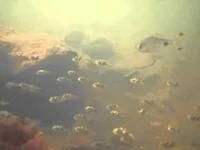
Wild shoal example.

Article on shoaling
1782831800464.webp
 
Last edited:
🤔🤔 that is definitely true of saltwater Fugu puffers.

I can't find a reference for that in Carinotetraodon travancoricus? They are quite different from Marine puffers, among other things and fortunately for us, they don't carry tetrodotoxin 😬 ☠️ 😅


hard to find a scientific source quickly but here is a video I can find quickly.
 
How does one treat them for parasites

Because wild puffer fish eat snails as part of their diet, they are at risk for parasitic flukes and tapeworms, which use snails as part of their life cycle. For this reason a product with the medication praziquantel is a good start.

A good second step is a product with levamisole for two reasons, one it treats nematodes if they have them, but two it also acts as an immunostimulant, to ramp up their immune system to help them get rid of other parasites they may have.

It's important to follow the directions on any deworming product, take the amount of time recommended and give the fish 7 to 14 days to rest between treatments.

Fritz Aquatics has several products that fulfill these requirements, as do other makers.
 
I would like to offer a correction to the care sheet. It says that pea puffers prefer gentle to moderate flow. I have personally seen pea puffers live in pretty high-flow shallow streams, so a high-flow tank environment should not be an issue for them; they really enjoy riding the waves. Here's a video of it from a well-known South Asian explorer:

I kept puffers in my Many Lessons tank, which had a TON of flow. This was the tank with 40+ fast moving fish, low temperatures, high flow -- all things traditionally "bad" for puffers.

Not only were the puffers healthy AF, they BRED and had tiny puffer fry 😭

I think the single most important thing is a FULL de-worming, de-parasite quarantine for at least 2 weeks in a dedicated quarantine tank.

Also, blackworms. I've been breeding blackworms in a separate tank for about 9 months so they always have live food. My puffers would sell their children for blackworms. They can be picky!

In my smaller 90cm tank, I once watched a hungry/angry puffer latch on to a neon tetra and take a chunk out, so remember that they truly can be aggressive -- but when well fed, they are quite peaceful.

Mine don't go after shrimp, but many report that they do.
 
It was easy to have them breed when my snail problem was this bad:

 
I kept puffers in my Many Lessons tank, which had a TON of flow. This was the tank with 40+ fast moving fish, low temperatures, high flow -- all things traditionally "bad" for puffers.

Not only were the puffers healthy AF, they BRED and had tiny puffer fry 😭

I think the single most important thing is a FULL de-worming, de-parasite quarantine for at least 2 weeks in a dedicated quarantine tank.

Also, blackworms. I've been breeding blackworms in a separate tank for about 9 months so they always have live food. My puffers would sell their children for blackworms. They can be picky!

In my smaller 90cm tank, I once watched a hungry/angry puffer latch on to a neon tetra and take a chunk out, so remember that they truly can be aggressive -- but when well fed, they are quite peaceful.

Mine don't go after shrimp, but many report that they do.
Also to add to their aggressive repertoire, I've seen them bite and shake their victim like a crocodile lol. Some people say that pea puffers do fine with fast-swimming fish because people think that pea puffers are relatively slow swimmers. WRONG! lol. They're lightning fast swimmers, and will outswim any other fish. Don't be fooled by the way they hover in the water column with a cutesy face.
 
Last edited:
I kept puffers in my Many Lessons tank, which had a TON of flow. This was the tank with 40+ fast moving fish, low temperatures, high flow -- all things traditionally "bad" for puffers.

Not only were the puffers healthy AF, they BRED and had tiny puffer fry 😭

I think the single most important thing is a FULL de-worming, de-parasite quarantine for at least 2 weeks in a dedicated quarantine tank.

Also, blackworms. I've been breeding blackworms in a separate tank for about 9 months so they always have live food. My puffers would sell their children for blackworms. They can be picky!

In my smaller 90cm tank, I once watched a hungry/angry puffer latch on to a neon tetra and take a chunk out, so remember that they truly can be aggressive -- but when well fed, they are quite peaceful.

Mine don't go after shrimp, but many report that they do.
Where can I find info on setting up a black worm tank? That sounds interesting and like an easy way to keep live food on hand! Thanks for this info it’s great.
 
There's no one good source, because there's a ton of different ways to do it.

I recommend a small (3-5 gal) unheated tank with an airstone or small HOB filter. Big, chunky gravel. I don't recommend sponge filters, as the worms get into the sponges and are hard to remove (and gross). You should still change 50-80% water weekly.

I got my initial worms from Eastern Aquatics: Live Blackworms Archives - Eastern Aquatics

1/8th or 1/4 lb will be more worms that you can imagine. Rinse them with RO/dechlorinated water and use tweezers to remove ALL the brown/grey leeches, then add your worms to your cycled tub/tank.

Use a fine-mesh net to disturb the gravel and collect the worms, and to feed the puffers. Eventually the puffers will learn that the net = food, which is awesome.

I feed the blackworms with... anything. boiled leaves, cucumber, algae wafers, protein wafers, fish flakes, fish pellets, you name it. Just treat them like fish; clean water, weekly water changes, and you'll have infinite pea puffer food.
 

Top 10 Trending Threads

Back
Top