Hi all, just thought I’d share my experience with my conventional looking, but unconventionally created (and maintained) 2.5-gal high tech pico system. It doesn’t have the most exciting aquascape and is a bit overgrown at the moment, but what makes it different from most other tanks is that it was completely designed and is being maintained with the help of ChatGPT.
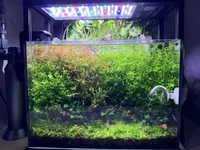
This all started when my son asked for a pet fish and what was supposed to be a simple Betta tank eventually spiraled into a fairly sophisticated high tech planted system with a few hundred dollars invested into equipment like a desktop CO2 injector, WRGB lighting and a HOB “wetland” refugium.
I have a good amount of experience wth the saltwater/reefkeeping side of the hobby and a decent level of “book” knowledge about the freshwater side, (having kept cichlids and other fish in the past), but this would be my first planted system. So to speed up the know-how, rather than spending countless hours trying to resolve all the confusing differences of personal opinions on methods, equipment and husbandry techniques, I decided to try and see if a neutral, data driven AI could help me shorten the knowledge curve- and perhaps reduce the amount of rookie mistakes and livestock mortality.
What I did was create a dedicated project within ChatGPT and had it assume the role of a master freshwater aquarist with 25 years of experience and then tasked it with helping me to design the system and then optimally maintain it. It then wrote a very comprehensive system prompt (operating instructions) and guided me through the whole process from the overall design, equipment, livestock and plant selection, etc. The aspect I found particularly powerful, was the ability for it to research topics and aggregate data in other languages. As much as the hobby has been democratized with the ease of exchanging ideas on the internet, there still are “silos” of compartmentalized information due to inevitable language barriers.
What was interesting was that it isn’t just a question and answer session, but became a collaborative process where I would bounce ideas off of it and it would flesh them out further and develop them into something a lot more sophisticated. For example, with my reef keeping background, I came up with the concept of adding a refugium for nutrient uptake and export as well as a mini food web to supplement feeding in the main display from microfauna spillover of copepods, Dero worms, rotifers and ostracods. ChatGPT took that concept and developed it into a HOB Fluval Breeder box wetland with emersed plants grown from clippings of Rotala and Pearlweed along with Pothos, Bacopa, Hydrocotyle, guppy grass, subwassertang and Salvinia.
What is particularly powerful is its ability to troubleshoot and analyze problems based on the data I feed it from water parameters and sending it photographs. For example, it helped me diagnose that a recurring bloom of hair algae was due to insufficient nitrate and phosphate levels as well as suboptimal CO2 and developed a fertilization regimen and an injector startup time, accounting for diffuser re-pressurization so that adequate CO2 is available at lights on in the morning.
All in all, I’ve been absolutely amazed with its usefulness and by the results and wanted to share my experience with others.
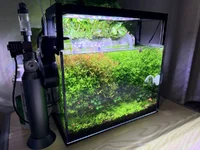
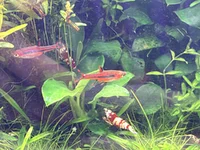
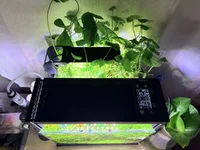
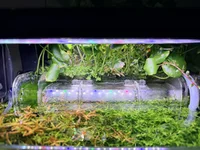
This all started when my son asked for a pet fish and what was supposed to be a simple Betta tank eventually spiraled into a fairly sophisticated high tech planted system with a few hundred dollars invested into equipment like a desktop CO2 injector, WRGB lighting and a HOB “wetland” refugium.
I have a good amount of experience wth the saltwater/reefkeeping side of the hobby and a decent level of “book” knowledge about the freshwater side, (having kept cichlids and other fish in the past), but this would be my first planted system. So to speed up the know-how, rather than spending countless hours trying to resolve all the confusing differences of personal opinions on methods, equipment and husbandry techniques, I decided to try and see if a neutral, data driven AI could help me shorten the knowledge curve- and perhaps reduce the amount of rookie mistakes and livestock mortality.
What I did was create a dedicated project within ChatGPT and had it assume the role of a master freshwater aquarist with 25 years of experience and then tasked it with helping me to design the system and then optimally maintain it. It then wrote a very comprehensive system prompt (operating instructions) and guided me through the whole process from the overall design, equipment, livestock and plant selection, etc. The aspect I found particularly powerful, was the ability for it to research topics and aggregate data in other languages. As much as the hobby has been democratized with the ease of exchanging ideas on the internet, there still are “silos” of compartmentalized information due to inevitable language barriers.
What was interesting was that it isn’t just a question and answer session, but became a collaborative process where I would bounce ideas off of it and it would flesh them out further and develop them into something a lot more sophisticated. For example, with my reef keeping background, I came up with the concept of adding a refugium for nutrient uptake and export as well as a mini food web to supplement feeding in the main display from microfauna spillover of copepods, Dero worms, rotifers and ostracods. ChatGPT took that concept and developed it into a HOB Fluval Breeder box wetland with emersed plants grown from clippings of Rotala and Pearlweed along with Pothos, Bacopa, Hydrocotyle, guppy grass, subwassertang and Salvinia.
What is particularly powerful is its ability to troubleshoot and analyze problems based on the data I feed it from water parameters and sending it photographs. For example, it helped me diagnose that a recurring bloom of hair algae was due to insufficient nitrate and phosphate levels as well as suboptimal CO2 and developed a fertilization regimen and an injector startup time, accounting for diffuser re-pressurization so that adequate CO2 is available at lights on in the morning.
All in all, I’ve been absolutely amazed with its usefulness and by the results and wanted to share my experience with others.
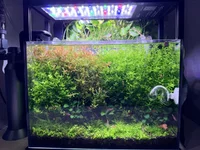





 especially when you have such beautiful growth


 . But on the flipside, that could give me the motivation to possibly swap it out for another plant like L. arcuata that has finer leaves and scales better to the size of my tank.