This is a good question. I am coming at this from a slightly different angle, because when I came back into the hobby last year, I chose to start my first high energy planted tank with only shrimp as inhabitants.
My short answer is if you are building a Walstad-esque self-sustaining ecosystem tank with minimal water changes, or a shrimp breeding colony with few if any water changes, then sure, I think there is probably some benefit to having beneficial meiofauna in the tank. But in an average scaped tank with CO2 I would argue that Amano shrimp, Clithons, and Otocinclus would probably do more of the heavy-lifting in regards to ‘clean-up’ in a setup like that.
These are some of the good guys (green labels), the not welcome crew (orange labels), and the heck-nope bad guys (red). I personally would put Hydra in the red group, at least for shrimp breeding tanks.
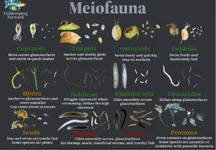
However, if you are running a high energy planted tank, with CO2, and high-capacity water changes once or twice a week, the dilution effect alone would probably render the population to low enough proportions that their presence may not be significant, except perhaps as a minor live food source for fish fry.
If you run any shrimp-only planted tanks (including bamboo, and amanos), purchasing meiofauna culture is far safer than not washing and dipping new plants. When I restarted in the hobby with a 60F last year, I started shrimp-only (neocaridina) due to the small size and shallow nature of the tank. It was cheaper to dabble in CO2 and high energy plants, in a smaller space, before deciding to take the plunge into something at a larger scale, and there aren’t a lot of fish you can squeeze into a shallow 10 gallon that might not jump out.
I scaped the tank, covering a few larger rocks with Christmas moss for the shrimp to forage through (which is where I think the majority of my beneficial meiofauna came from), added some background plants including Rotala H’ra, Ludwigia repens and natans, and Micranthemum micranthemoides. The carpet was Monte Carlo and Lilaeopsis brasiliensis. Sort of overgrown here as there were shrimp fry hiding
everywhere.
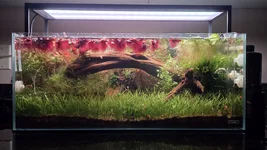
After a couple of months that tank was teeming with life far beyond the colony of shrimp. Because there were no fish in that tank, they thrived. There was nothing to eat them. You could sit and stare at copepods, ostracods, and Naididae for hours as they scurried and slithered their way around the tank.
View attachment 20260210_200631_1_1.mp4
However, there is a dark side to meiofauna in a setup like that.
For shrimp-only tanks, there are two primary beasts we absolutely want to avoid if possible. Planaria is one, especially if you also have snails, as the treatment can be lethal, and the other is freshwater hydra because they are harmful to shrimp, and virtually indestructible.
Because this was a small shrimp-only tank, and small tanks are difficult to keep stable, water changes are lower in volume (~10-20%) and less frequent to avoid osmotic shock to the shrimp. That probably allowed the copepod and ostracod populations to really ramp up, because they aren’t getting wholly suctioned out of the tank on a regular basis. The small bioload from the shrimp doesn’t really impact water quality nearly as fast as a tank with fish, providing your stems aren’t melting in the back triggering ammonia spikes.
While setting up my tank, all the plants were held in a quarantine primarily to ensure I wasn’t adding bladder snails, but none of the plants were dipped. So the meiofauna in that tank came in with the first shipment, most likely the mosses.
Once the 60F tank was up and running, CO2 was dialed in, and my Blue Diamond neocaridina colony was happily swimming around enjoying their new home, I purchased a small plant quarantine glass tank for a few additional plants. I brought in a little more Buce and Anubias, from a well known and reputable vendor. Tied both to small rocks, and put them in quarantine for several weeks, before considering adding them to the 60F.
I was most concerned about Planaria because the shrimp colony was thriving, females were berried, and I didn’t want to put anything in the tank to change that.
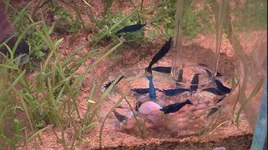
There were several bladder snails in the new shipment, but I quickly nixed that problem. After several weeks everything seemed to be going fine, and I was planning to move the plants over to the 60F during the next water change…and then I saw this on the tank glass.
View attachment 20260225_074304.mp4
Hydra.
While the biologist in me thinks they look cool, and are rather fascinating, they absolutely aren’t what you want in a tank where you intend to breed shrimp. They can be lethal to fry. Just a couple at first, and in just a few days they rapidly exploded across one wall of the quarantine tank glass. I had a surplus of Ramshorn snails in that tank, that would keep the quarantined plants clean. I would watch curious snails scoot along the glass until they reached a hydra, and you could see them actually get stung, and recoil. While they really annoyed and stressed the snails, Hydra DO sting and KILL shrimp fry. I almost put those plants in the 60F. I realized I dodged a bullet, and it affirms why my plant quarantine protocols really are important.
Hydra can readily resist the normal methods of control for snails, like alum and weak bleach, especially if they are in their encysted form. Dipping them, depriving them of light etc., tends to drive them into their indestructible encysted state, rather than kill them. So, I basically killed that entire quarantine tank with fire. I actually threw out the cheap HOB filter for the quarantine tank because I couldn’t access all areas in the filter with water flow well enough to ensure there weren't more encysted hydra trapped in the housing, destined to return. I dumped the controsoil, and soaked that tank in enough bleach to scramble the DNA of any lifeform on earth, and cycled a new tank. I didn’t want to throw the plants out, but I certainly wasn't risking putting them in the 60F, so they got heavily bleach-dipped, too. Predictably, the Buce rolled over and died. No shock there. The Anubias looked like it had been through a blender, but surprisingly, the rhizomes survived, and they are alive and pushing new growth. They now live in the fish quarantine tank as portable greenery that I can remove if I need to treat the fish, and the hydra have not returned, but it could have been disastrous for my breeding shrimp colony if I had moved those plants to the 60F a week before. Sometimes procrastination pays off .
I know for most here, that they may never even see hydra if they are running tanks with fish that eat them. And most shrimp keepers probably aren’t scaping tanks and running CO2, but we all get into this hobby for different reasons and have different goals, or may try different types of tanks at various points in time. Most fish, except maybe Otos, aren't really compatible in an intentional shrimp breeding tank, and Otos don't eat hydra (Mollies and Guppies are said to help control hydra populations).
Needless to say, if I run any more shrimp-only breeding tanks, it will probaby be TC plants, and I will purchase cultures of known composition.
So, circling back to your initial question, yes, I think if you want, or need a known quanta of meiofauna in your tanks, without the potential risks of adding something potentially detrimental to a thriving tank, something like a Copepod culture from companies like
Carolina Biological Supply are a safe option, and if you are running shrimp-only tanks, a far more secure option than not washing/dipping purchased plants. Just my 20 cents, already adjusted for inflation