Welcome to ScapeCrunch

We are ScapeCrunch, the place where planted aquarium hobbyists come to build relationships and support each other. When you're tired of doom scrolling, you've found your home here.

Cyanobacteria

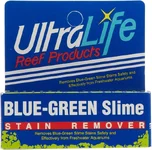
Ultralife Blue-Green Slime Remover. I have used this product to great success over the years on countless tanks I let bottom-out of NO3 with the presence of PO4.
How much of this did you dose? I did one treatment last night and it says 48 hours later to do a second dose if necessary. I don’t have a massive breakout, spots here and there that manual removal wasn’t completely getting rid of.
 
@Naturescapes_Rocco coming back to this as the cyano is making a comeback. Having tested my water, it appears that PO4 is at 1-2ppm and NO3 is showing zero. I have just dosed 880 milligrams of saltpetre potassium nitrate to reach 10ppm of KNO3, but these results have led to me pondering whether the ratio elements in APT E may be too high on PO4.

A quick look on Rotala butterfly indicates that 1ml of APT EI would give
NO31.31
N0.3
P0.31
K1.57
Mg0.3
Fe0.03

On the contrary, 1ml of TNC Complete (alternative in the UK) would give a far lower ratio of PO4 but a far higher ratio of K to NO3.

N0.2778
P0.037
K0.9259
Mg0.1481
Fe0.0148
Mn0.0033
Cu0.0004
B0.0019
Zn0.0019
Mo0.0002

Seems to me that it would be better for me to switch to TNC Complete in the future as the PO4 to NO3 ratio would mean that I do not have to add KNO3 to the tank but just increase the amount of ferts dose.

Is my logic sound?
 
@Naturescapes_Rocco coming back to this as the cyano is making a comeback. Having tested my water, it appears that PO4 is at 1-2ppm and NO3 is showing zero.
Thanks for the update! Adding it to my list of aquascapers with zero NO3 and non-zero PO4!
I have just dosed 880 milligrams of saltpetre potassium nitrate to reach 10ppm of KNO3, but these results have led to me pondering whether the ratio elements in APT E may be too high on PO4.
This is the reason I stopped using it. It IS low on NO3. It basically states that on the site:

1757454033243.webp
Seems to me that it would be better for me to switch to TNC Complete in the future as the PO4 to NO3 ratio would mean that I do not have to add KNO3 to the tank but just increase the amount of ferts dose.

Is my logic sound?
Your logic is sound, especially if you're using testing/observation on your tanks. I Almost ALWAYS find that cyanobacteria is a result of little-to-no NO3, which (after C) is the most consumed nutrient by plants. If I see Cyano, 99% of the time I will test <2ppm NO3 in my tank at that time.

My biggest tank consumes over 20ppm NO3 per week, sometimes as much as 30ppm or more. I'd have to dose a TON of a weak fertilizer like APT 3 (APT complete's new name) to achieve non-limiting NO3 levels, meanwhile all the remaining P, K, and Micros/TE would not be consumed.

I still love APT line of products. APT 3 is great for tanks with rich levels of NO3 in the aquasoil, or for tanks with decently high fish load (where fish waste provides extra NO3). It's also great for low-light tanks with little to no CO2, if not overdosed. However, if you have a high-tech CO2 enriched tank with high light, you will either need to dose much more APT 3 and increase your water change frequency, or just use a fertilizer that has more NO3, to achieve non-limiting NO3 levels.

Or, you could do what I do, and just create your own liquid ferts... or dry dose them! That way you have full control of your nutrient levels and save money. Comes at the cost of a learning curve and many hours spent on Rotala Butterfly's nutrient calculator, but worth it once you figure out how it works.

On all my tanks, I use an auto-doser to dose micros daily, and I front-load KNO3, KH2PO4, and K2SO4 after each water change to ensure my levels never reach zero. My aquasoil is basically fully depleted, and my experiment tank only uses inert sand. To keep cyanobacteria away, I just need to make sure my NO3 never reaches zero (especially if my PO4 is also never reaching zero).
 
Thanks for the update! Adding it to my list of aquascapers with zero NO3 and non-zero PO4!
Glad to be an example. 🤣

I'm afraid I don't have the time to make my own ferts as I spend too much time on my tank for my wife's liking as it is. Also can't seem to find a decent seller for dry salts in the UK now. The UKAPS gang are going with coir tec to make their own ferts.

Question now is will my phosphates be consumed after I've increased nitrates?
 
Question now is will my phosphates be consumed after I've increased nitrates?
The easiest tell for limiting phosphates is GSA (green spot algae). If you start to see those little hard dots of circular algae on glass/leaves/hardscape, you know your PO4 has been depleted, too!

These tanks are a constant balancing act 😭
 
These tanks are a constant balancing act 😭
I have a touch of cyano and trying to keep it no more than that. So this is great info.

What makes it complicated for me is that right now is my fresh aquasoil sucks down the PO4. So I have to add a bit extra. Eventually that will stop, so there will have to be a dosing shift. It will also give out of nitrogen at some point producing another dosing shift. I'm trying to navigate these without too much headache or algae. This helps a lot.
 
The easiest tell for limiting phosphates is GSA (green spot algae). If you start to see those little hard dots of circular algae on glass/leaves/hardscape, you know your PO4 has been depleted, too!

These tanks are a constant balancing act 😭
It explains why my other tank had no issues with cyano no matter what. It was full of GSA so phosphates were depleted.
 
Found a great product that genuinely worked for me. It delat with a second outbreak of cyano in a couple of days a month or so ago. So far so good.

View attachment 10219
I used this numerous times in the past. Finished it without having much of an impact on the cyano in my substrate.
 
I guess, like any of these cures, the actual cause needs to be removed from the equation first. In my case that was the dead wood. And an improvement in flow and distribution. Also, perhaps increasing nutrient status. So far so good. I’ll keep you updated. If it comes back then I’ll have to reconsider my opinion.
 
I guess, like any of these cures, the actual cause needs to be removed from the equation first. In my case that was the dead wood. And an improvement in flow and distribution. Also, perhaps increasing nutrient status. So far so good. I’ll keep you updated. If it comes back then I’ll have to reconsider my opinion.
I used it about a month ago or so, worked great for me. I’d say it took about a week to fully disappear.
 
This is an interesting take on BGA.

I've had it and seen it in many, many tanks over many, many years.

IMO pinpointing a causal effect is next to impossible.

I've seen it in tanks with LOADS of NO3. I've seen it in tanks with NO NO3. I've seen it in tanks with low flow, I've seen it tanks with high flow. I've seen it with healthy plants, I've seen it with starving plants.

In my own tank I've had it with super healthy plants and about 40 ppm NO3 in the water column a few times over the years.

And personally I don't buy the Redfield ratio. Most of the best aquatic plant growers I know are more like 4:1 or 5:1 NO3 to PO4. I don't think adjusting your ratio will do much to prevent it. If anything too low of PO4 in relation to NO3 can produce weak plants.

And I'm not arguing, I'm just telling you what I have seen over the years.

For the golfers out there I see it as kind of like the shanks.........creeps out of nowhere for no apparent reason. Then when it goes away it may not come back for years or ever.

The few times I have got it I waste no time and knock it out with antibiotics. It's not something you want lingering. Just get rid of it.

Then double check what you are doing. Are plants well fed? Is CO2 optimized? Is surface agitation and flow good? Are you regularly cleaning the substrate? Are you doing regular large water changes (dissolved organics)? Is horticulture and plant husbandry good? Are you removing dead and decaying plant matter? Are you keeping filters clean?

You know all the regular stuff that makes a tank happy. And even then, I can tell you that it can creep up again out of nowhere.......even start attacking very healthy plants. Like I said, for me treat it and get rid of it as fast as you can.
Gregg, what antibiotic did you use and at what dose ?
 
I fought cyano for months and didn't have any luck until @Koan told me emycin didn't work at low pH. It took a couple-3 weeks, but once I shut off my CO2 and put in an airstone, it slowly started to die. I feel like the other remedies might have the same or similar limitation because everyone has luck with them except me. The cyano didn't die easily. I kept manually removing it, and it grew back less and less. I had been manually removing all along, but the pH change made the difference in it growing back. I still get an occasion crown with a spot in it, but it goes away or I squirt a little peroxide in it. It's rare any more though.
 

Top 10 Trending Threads

Back
Top