
Welcome to ScapeCrunch

We are ScapeCrunch, the place where planted aquarium hobbyists come to build relationships and support each other. When you're tired of doom scrolling, you've found your home here.

An alternative approach to CO2?

  • Thread starter Thread starter Yugang
  • Start date Start date
  • Tagged users Tagged users None
Hi @Yugang, thank you for sharing your idea about increasing the co2 in air of the hood of a tightly closed lid tank. I understand the rationale behind it. It would greatly reduce the amount of CO2 needed.
I am not capable to build the electronics with the sensor, nor do I have the space to set up a test tank. If someone is interested to test the idea, it won't be expensive or complicated, that would be great. I am 90% confident it will work, but the proof is in the real experiment.
Inspired by a thread on another forum, I’ve built and running an aerial CO2 (and oxygen) sensor in a gas pocket, functioning as a digital drop checker, for water CO2 monitoring purposes. So I’m familiar with the technology which I assume is required.

Some things come to mind. Indeed diffusion into the water and it’s equilibrium with the aquarium hood’s CO2 will be temperature dependent. But that’s not a showstopper I guess, mere a factor to take into account.
My current experience with the CO2 sensor model SCD41, it needs regular calibration, at least when operating for precision in in low ppm ranges. It is very simple though, just put it outside for 10-15 minutes and push a button, but still.
I’m not sure the drift is relative or absolute. If it is absolute, drift might not be a big factor.
A possibly big downside of the method would be for me, I can’t open the the aquarium hood/lid often, the CO2 would escape. One could mitigate this by pumping a lot of CO2 in the hood, but being able to release a lot of co2 in a short amount of time would greatly increase health risks for our tank and maybe ourselves (for instance when a check valve hangs, measurement is incorrect or required CO2 is computed incorrect.
What I like about a CO2 Bell and a horizontale reactor and its overflow mode though, is the “set and forget” method. Low dependency on (measuring or precision dosing) technology (which tend to be unstable and/or drift and/or break down) for a specific level of CO2 in the water column.

But I do agree, the idea is worth being tried out. I’m not a fan of pressurized CO2 canisters though (again thinking about what happens when all CO2 is released at once stops me from having one), so I might want to try it out with yeast based CO2, which might be sufficient. Any overproduction can be mitigated by 2 solenoids and/or a simple air pump. A small plant only tank would be perfect for a try out.

Currently too busy with other stuff, but again, thank you for posting the idea. Note to self is ✅.
 
Hi @Yugang, thank you for sharing your idea about increasing the co2 in air of the hood of a tightly closed lid tank. I understand the rationale behind it. It would greatly reduce the amount of CO2 needed.

Inspired by a thread on another forum, I’ve built and running an aerial CO2 (and oxygen) sensor in a gas pocket, functioning as a digital drop checker, for water CO2 monitoring purposes. So I’m familiar with the technology which I assume is required.

Some things come to mind. Indeed diffusion into the water and it’s equilibrium with the aquarium hood’s CO2 will be temperature dependent. But that’s not a showstopper I guess, mere a factor to take into account.
My current experience with the CO2 sensor model SCD41, it needs regular calibration, at least when operating for precision in in low ppm ranges. It is very simple though, just put it outside for 10-15 minutes and push a button, but still.
I’m not sure the drift is relative or absolute. If it is absolute, drift might not be a big factor.
A possibly big downside of the method would be for me, I can’t open the the aquarium hood/lid often, the CO2 would escape. One could mitigate this by pumping a lot of CO2 in the hood, but being able to release a lot of co2 in a short amount of time would greatly increase health risks for our tank and maybe ourselves (for instance when a check valve hangs, measurement is incorrect or required CO2 is computed incorrect.
What I like about a CO2 Bell and a horizontale reactor and its overflow mode though, is the “set and forget” method. Low dependency on (measuring or precision dosing) technology (which tend to be unstable and/or drift and/or break down) for a specific level of CO2 in the water column.

But I do agree, the idea is worth being tried out. I’m not a fan of pressurized CO2 canisters though (again thinking about what happens when all CO2 is released at once stops me from having one), so I might want to try it out with yeast based CO2, which might be sufficient. Any overproduction can be mitigated by 2 solenoids and/or a simple air pump. A small plant only tank would be perfect for a try out.

Currently too busy with other stuff, but again, thank you for posting the idea. Note to self is ✅.
Thank you for considering this @PeerUnk , the idea seems really in capable hands with your experience. I am very enthusiastic about the concept, believe it could be a breakthrough if anyone demonstrates it, but am unable to test it myself.

As to your concern about opening the hood, or safety, please bear in mind that we're talking about 1% CO2 under the hood or less. These are really small concentrations and not a lot of CO2 involved.

I was so impressed reading more about the capabilities of photo acoustic spectroscopy sensors, their specifications and low price, if you could take it further that could lead to something for the hobby. Imagine, set your CO2 just with a remote control and then forget about it....

I am recently too busy to spend much time on ScapeCrunch, but for this project I will make time. Please reach out with PM if you'd like to have some further discussion.
 
As to your concern about opening the hood, or safety, please bear in mind that we're talking about 1% CO2 under the hood or less. These are really small concentrations and not a lot of CO2 involved.

I was so impressed reading more about the capabilities of photo acoustic spectroscopy sensors, their specifications and low price, if you could take it further that could lead to something for the hobby. Imagine, set your CO2 just with a remote control and then forget about it....

I am recently too busy to spend much time on ScapeCrunch, but for this project I will make time. Please reach out with PM if you'd like to have some further discussion.
Check, will get in touch when I have time and energy to get my hands dirty on this topic!
 
Check, will get in touch when I have time and energy to get my hands dirty on this topic!
Talking about innovation .... really hope that @PeerUnk finds some time and energy for this one.

I believe it could be a breakthrough, at least for some first mover hobbyists and large commercial tanks, and perhaps later for a bigger group. Innovation goes really slow in our hobby and manufacturers seem not to take the lead even if the ideas are offered to them.

Imagine, set your CO2 with a remote control and then forget about it.
 
Thanks for reminding us of this, @Yugang. I too think @PeerUnk is on to something here. Another example at looking at a design and re-thinking the perspective. In this case, let's measure the CO2 in the air, as opposed to, in the water.

Love it!
 
I was asked how this solution would compare to the Horizontal Yugang reactor .

The short answer is that I believe we should explore as many directions as possible, build experience over time and let the best solutions win. I believe especially for large tanks, advanced applications, this solution could be the winner.

For this particular solution I would see a couple of benefits:
  • Controlled by electronics, CO2 can easily be set and adjusted by the user. Manufacturers could offer it as a user friendly integrated solution with the tank.
  • Very stable, as the sensor accurately sets the CO2 concentration in the air (less than 1%), and concentration in water follows from Henry's law.
  • As we measure CO2 in the air, it is independent of water chemistry. This is the benefit/functionality of professional CO2 meters that currently cost several thousands USD.
  • Potentially big savings of CO2 consumption as we work with a semi-closed system. I imagine probably at least 90% savings.
  • We can save on the CO2 regulator, just need the electronics controller to release puffs of CO2 via the solenoid. The CO2 sensor is cheap. System cost can be lower than good CO2 setup today.

I do believe some development work would be needed for the final solution
  • We don't want water vapour condensation on the sensor or electronics. Probably need to operate them at slightly elevated temperatures.
  • We want the system to be as much closed as possible to save on CO2, but still some decent gas exchange for the plants and livestock. We need to find the optimum between competing requirements. I have operated nearly perfectly closed aquarium for months, don't expect problems with this but it is a factor that needs to be considered.

In summary, we have an idea based on simple physics, and affordable technology to experiment with it. Time will tell if it will be a winner
 
I too think @PeerUnk is on to something here.
Well @Art , I don’t know whether I remember it correctly: it ain’t my idea, but @Yugang who came up with it.

really hope that @PeerUnk finds some time and energy for this one.
I totally forgot about this topic, as I’m no CO2 user. But I still find the topic interesting, so I’m willing to invest some time and energy in it. The inner researcher and engineer in me woke up again.

I did have my own CO2 and oxygen air sensors running, connected to a microcomputer and coded my own software so it is connected to a monitoring platform. Currently the device is out of order because the oxygen sensor malfunctioned.

A few weeks ago I bought a 3D printer, so it’s even became easier to created a good housing for the electronics with tight air seals.

So step 1 will be to develop such a case for the sensors and microcomputer (so it can be mounted onto a lid) and get the whole thing up and running again.
Step 2: selecting a dedicated test tank and build an somewhat airtight lid. This will be transparent, as I don’t want to have a light below the lid. Otherwise it will increase temperature too much for my liking, especially in the summer.
Step 3: the test setup will incorporated plants in inert sand and would be monitored CO2, oxygen and temperature 24/7. I will use my breath to alter the CO2 content of the air pocket below the lid. Maybe I’ll add my DIY pH sensor device to the setup.
Step 4, 5, 6. TBD.

Time will be an issue upcoming 4 months due to specific reasons, but I’ll see what I can do.

When I have updates to report, do you want to have it posted in this thread?

Any other suggestions?
 
Well @Art , I don’t know whether I remember it correctly: it ain’t my idea, but @Yugang who came up with it.


I totally forgot about this topic, as I’m no CO2 user. But I still find the topic interesting, so I’m willing to invest some time and energy in it. The inner researcher and engineer in me woke up again.

I did have my own CO2 and oxygen air sensors running, connected to a microcomputer and coded my own software so it is connected to a monitoring platform. Currently the device is out of order because the oxygen sensor malfunctioned.

A few weeks ago I bought a 3D printer, so it’s even became easier to created a good housing for the electronics with tight air seals.

So step 1 will be to develop such a case for the sensors and microcomputer (so it can be mounted onto a lid) and get the whole thing up and running again.
Step 2: selecting a dedicated test tank and build an somewhat airtight lid. This will be transparent, as I don’t want to have a light below the lid. Otherwise it will increase temperature too much for my liking, especially in the summer.
Step 3: the test setup will incorporated plants in inert sand and would be monitored CO2, oxygen and temperature 24/7. I will use my breath to alter the CO2 content of the air pocket below the lid. Maybe I’ll add my DIY pH sensor device to the setup.
Step 4, 5, 6. TBD.

Time will be an issue upcoming 4 months due to specific reasons, but I’ll see what I can do.

When I have updates to report, do you want to have it posted in this thread?

Any other suggestions?
@PeerUnk this is fantastic, and I believe a real contribution to the hobby.

As I saw little progress, two years after posting here, I also posted on UKAPS. I am so happy that another hobbyist with a talent for electronics from UKAPS, Jaisol, is also volunteering to build a prototype detector. Could this be a ScapeCrunch&UKAPS collaborative project?
 
Last edited:
May I ask some help from the various experts in water chemistry on this forum? I am really happy that both on UKAPS and Scapecrunch there are volunteers to try this out, and perhaps the best would be if we could all collaborate as a team.

I would appreciate if someone can double check my calculations that a range of 0.5-1% CO2 in atmosphere would yield via Henry’s law a good testing range CO2 ppm in the planted tank. It is good to have some peer review, as I would hate that we build the hardware and then discover a calulation mistake in the CO2 targets.
 
I
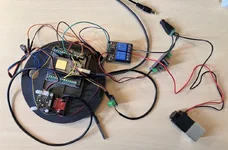
haha, nice @Yugang to see the unfinished prototype on Scapecrunch so soon ;-)
I'll try to update progress in this thread as well.
I am very greatful if you and other hobbyists can take this further, and fully understand it will take some time. I am mostly absent from ScapeCrunch and UKAPS due to time constraints, and I fear that in a not too distant future I may even be a tankless supporter of the hobby.

Until we have tested we have no guarantee that this concept will work, and perhaps be commercially viable, but it would be a shame if we lose an opportunity for the hobby if we don't give it a try. Of course I am a bit biased, but I strongly believe in the concept and from a physics perspective it seems almost a no brainer to me.

Why now ? Because we can leverage new technologies at very affordable price points.
 

Top 10 Trending Threads

Back
Top