
Welcome to ScapeCrunch
We are ScapeCrunch, the place where planted aquarium hobbyists come to build relationships and support each other. When you're tired of doom scrolling, you've found your home here.
Social Feed

Staff member
I Donated 2026
Founding Member
Hello Welcome, Gabi
Welcome to ScapeCrunch, @Gabi!
We would love to get to know you. Please tell us about yourself. What tank do you have?
We would love to get to know you. Please tell us about yourself. What tank do you have?
0 Replies
·
3 views
I have been sitting with hardscaping this UNS 90u tank (35.43”L x 22.”W x 22”H) for about 5 weeks. It's tall and deep and I have a perfect view of it from my office desk at the perfect height! The plan is for a high tech, heavily planted tank. I have a big load of different varieties of bucephalandra and anubias arriving in a few weeks that should go great on this hardscape and I am building my plan for the other plants. Here are my final 3 drafts on the hardscape. I am afraid the upper middle quadrant of the tank may have too much empty space being held with leggy stem plants growing towards the light. #1 and #3 seem to be the best choices, with #3 seeming the best. I need to finalize and get this tank filled with water! Any critiques from this experienced bunch?
Substrate: Gravel with root tabs
CO2: Yes
Light: Chirios WRGB2 Pro 90
Hardscapre: Dragon Stone and Driftwood
Filter: Oase Biomaster 2 600 (already fishless cycling on 20 gallon tub from home depot)
I appreciate the feedback.
Substrate: Gravel with root tabs
CO2: Yes
Light: Chirios WRGB2 Pro 90
Hardscapre: Dragon Stone and Driftwood
Filter: Oase Biomaster 2 600 (already fishless cycling on 20 gallon tub from home depot)
I appreciate the feedback.


17 Replies
·
625 views


I Donated 2026
Expert in Residence
MOTM Winner
I have good nutrient, CO2 and light levels, why do my plants still grow poorly
Many hobbyists spend time perfecting tank parameters, nutrient, light and CO2 levels, thinking that this automatically translates into optimal plant growth. While these factors are important, there are many other factors that affect plant growth.
For example above we have two groups of Lysimachia parvifolia growing side by side. Both groups have access to the same parameters, CO2, light, nutrients, substrate. However, the group on the right is growing poorly with darker, melting leaves and the group on the left is growing super vibrant red, with hardly a blemish.
This is not due to some arcane reason such as water flow hitting one group but not the other. The reason here is much simpler - the group on the right has been trimmed back repeatedly and allowed to grow in the same spot for a few months, while the group on the left was uprooted in the last month, divided and replanted. Overcrowding, both above and below the substrate, resulted in poorer quality new leaves being produced for the group of the right. This poor growth happened despite great growth parameters, a ton of CO2 and nutrients in the water column etc.
Different plants have different tolerances for overcrowding and aging. Some plant species regenerate well from repeated trimming cycles, others need replanting more frequently. Having great growth conditions delay deterioration of old growth, but most plants grow more optimally with regular replanting to clear congested rootzones and old growth.
Trimming and replanting cycles
The exact number of trimming cycles each species can regenerate from, and the time it takes for old growth and root zone congestion to take effect is different for each aquarium environment. Generally, if aquarium conditions are more spacious, and there is more substrate depth and stable growth conditions, plants can grow in one spot longer. Stressful growth conditions, poor nutrient/CO2 levels and even poor microbial balance accelerate deterioration of old growth.Interestingly, on the opposite end, overcrowding and root zone congestion also happens more quickly in fast growth aquariums. Hobbyists that throw a ton of nutrients and CO2 at their plants run headfirst into the brick wall that is overcrowding. This can be countered somewhat by using a portion of slower growing plants in an aquarium. The slower growing plants can be worked less often, while the fast growers are on a more regular replanting cycle.
Many aquascapers avoid stem plants because they require much more frequent replanting to grow well. Species such as Anubias, Bucephalandra and Cryptocoryne species on the other hand, have extremely long replanting cycles, and can grow for years without needing to be uprooted.

In this stem plant heavy aquascape that is around 7 months old, every single plant cluster has been replanted at least once. A sample of the replanting cycle for each species:
- Rotala blood red SG - every 4 months
- Rotala macrandra mini type 4 - every month
- Lysimachia parvifolia - every 2-3 months
- Xyris difformis - every 5-6 months
- Elatine triandra - every month
- Rotala florida - every 3-4 months
- Staurogyne purple - every 5 months

Uprooting, cleaning, replanting:

To refresh stem plant bushes, we will replant the fresh tops of the plants, while discarding the older bottom portions.
The first step is to uproot the entire stem plant bush. To control the mess when pulling up the soil, we recommend using a water siphon to vacuum the area when pulling up plants. The siphon should be held very close to the point where the plant is being pulled up to catch the soil debris.
We will try to remove as much of the old root system as possible and also remove any organic debris that has accumulated in the area. While organic debris contributes small amounts of nutrients through decomposition, a build-up of organic debris will interfere with root formation for more delicate plants and will also trigger algae. To stir up the organic debris, we use a turkey baster to spray jets of water onto the substrate while vacuuming with a siphon. The aquasoil should look clean before we start replanting.

The next step is to sort the uprooted stems and select only the healthiest heads for replanting. (A) is a middle portion and already has several branches. It is a poor choice as it will give rise to very uneven growth. (B) is a weak cutting- observe how thin the stem is, and the lack of colour. If replanted, it has a lower chance of success. (C) is ideal. A thick, singular healthy top with healthy new leaves.

Enriching the substrate with new aquasoil
When plants are uprooted, we can take the chance to enrich the substrate. There are two main ways to replenish depleted aqua soils. The first is to use nitrogen-rich root tabs. The second is to add fresh ammonia-rich aquasoil periodically. A good rate is adding 1% of new ammonia-rich aquasoil per month. For example, if you have 30kg of aquasoil in an aquarium, adding around 300 grams per month will work well. You can add new aquasoil during plant replanting cycles. Simply remove a portion of old aquasoil with a water siphon or spoon, then add and mix in the new aquasoil. This method may be cheaper than using root tabs in the long run

Replanting entire planted aquariums regularly is not feasible for most aquarists. So having an aquascape consisting solely of fast growing stem plants can be a nightmare when overcrowding and age sets in. Aquarists should plant a mix of slower growing species and species that do not need frequent trimming/replanting. Then the fast growing bunches can be replanted on a rotation basis - only one species is replanted during each weekly water change for example.Replanting work requires skill and dexterity. It is often difficult for beginners to manage, until some experience is gained. It becomes much easier with practice and time.
In this aquarium, Rotala florida, Xyris difformis, Syngonanthus species are all plants that can grow for months without replanting.

With consistent maintenance, aqua soils do not need to be replaced. The aqua soil in this aquarium is 1.5 years old APT Feast. Regular enrichment and clearing of detritus allows the substrate to perform like new. By renewing plant growth continually through replanting, and enrichment, planted aquariums also become more algae resistant.
This article is a slightly condensed version as I know folks don't like to be redirected, the full article can be found here:
Good parameters, Good CO2, Good light, Poor plant growth?
19 Replies
·
458 views


I'd like to hear other people's thoughts on using pH drop to estimate CO₂ levels.
I'm in a rather strange situation. First of all, I use two good-quality digital pH meters, both properly calibrated and well maintained. I've been using this type of equipment for years because, before getting into aquariums, I was (and still am) heavily involved in hydroponics.
Anyway, here's the situation:
My fully degassed pH (water left degassing indoors for 72 hours) is 7.6. I know that degassing indoors theoretically results in a higher equilibrium CO₂ concentration than the commonly referenced 0.6 ppm achieved outdoors, but let's use that as a reference point.
With CO₂ running, the aquarium reaches a pH of 5.6, giving me a pH drop of 2.0.
Using the standard ph drop relationship and assuming 0.6 ppm CO₂ at equilibrium, that would suggest roughly 60 ppm CO₂.
However, both on this forum and in various Facebook groups, I often see people reporting pH drops of around 1.0–1.4. Some have even claimed to measure about 60 ppm CO₂ with a Hanna meter while having only a 1.4 pH drop, using water degassed outdoors.
If that were true, then extrapolating from those numbers would suggest that my tank is running at something like 240 ppm CO₂, which seems highly unlikely. My fish appear perfectly fine, and my drop checkers aren't even yellow. In fact, I have three different drop checkers in the tank, using different indicator solutions and placed in different locations, just out of curiosity.
So I'm wondering:
I'd really be interested to hear your thoughts on this rather confusing situation.
I'm in a rather strange situation. First of all, I use two good-quality digital pH meters, both properly calibrated and well maintained. I've been using this type of equipment for years because, before getting into aquariums, I was (and still am) heavily involved in hydroponics.
Anyway, here's the situation:
My fully degassed pH (water left degassing indoors for 72 hours) is 7.6. I know that degassing indoors theoretically results in a higher equilibrium CO₂ concentration than the commonly referenced 0.6 ppm achieved outdoors, but let's use that as a reference point.
With CO₂ running, the aquarium reaches a pH of 5.6, giving me a pH drop of 2.0.
Using the standard ph drop relationship and assuming 0.6 ppm CO₂ at equilibrium, that would suggest roughly 60 ppm CO₂.
However, both on this forum and in various Facebook groups, I often see people reporting pH drops of around 1.0–1.4. Some have even claimed to measure about 60 ppm CO₂ with a Hanna meter while having only a 1.4 pH drop, using water degassed outdoors.
If that were true, then extrapolating from those numbers would suggest that my tank is running at something like 240 ppm CO₂, which seems highly unlikely. My fish appear perfectly fine, and my drop checkers aren't even yellow. In fact, I have three different drop checkers in the tank, using different indicator solutions and placed in different locations, just out of curiosity.
So I'm wondering:
- Do you think the pH drop method is being misinterpreted by many hobbyists?
- Could there be something fundamentally wrong with the assumptions behind comparing pH drops between different tanks?
- Has anyone here measured dissolved CO₂ directly and compared it against pH drop calculations?
I'd really be interested to hear your thoughts on this rather confusing situation.
8 Replies
·
65 views

Supporting
I Donated 2026

Planted 12/17/25
Goals and Past History:
This tank has been running since July 2024 and was originally inspired by George Farmer's home display tank.
I stocked mine mainly with swords and crypts along with Hyphessobrycon wadai (blueberry tetra), H. pulchripianis (lemon tetra), corydoras pygmaeus and Amano shrimp. These are all still in the tank today, sans a few jumpers I lost. Here's what it looked like before I changed goals to a high energy stem plant tank.

Things were humming along well with this tank until March 2025 when the tank suffered a major planaria outbreak. I wanted those vile critters gone, so I dosed to full cycles of No Planaria. This product worked on the planaria, but also severely damaged the beneficial bacteria colony. Instant algae fest which I battled with for the next 6 months.
Things cleared up in September 2025 and were going well. I hadn't been on Scapecrunch for many months, so I decided to get back into the forum and see how everyone's tanks were looking. I perused many a tank journal and after seeing everyone's gorgeous tanks, I decided I wanted some color and a change! I decided to give a high energy stem plant tank a go, so here we go!
This is my first journal and first real attempt at creating a tank that's full of different colors, contrasts and textures.
Equipment, specs, plants and ferts coming soon....
74 Replies
·
4483 views

I Donated 2026
Expert in Residence
MOTM Winner
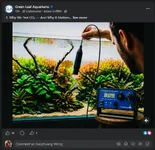
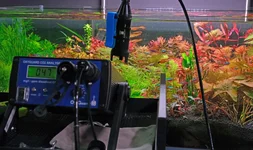
Era of AI slop is truly upon us. Firstly, no one holds the Oxyguard analyzer's probe as it takes 15-20mins to get a reading.
Size of the box is wrong and no shadows below the box, caps missing and a strap that goes nowhere. Aquarium looks fake as well. Real pic below for comparison.
18 Replies
·
465 views


Supporting
I Donated 2026
Tried to open the app to change a setting. Goes to a login screen. Checked Chihiros support, and it seems to be an issue with the latest version of the app. The issue appears to be widespread.
Discussion on the Chihiros site.
Discussion on the Chihiros site.
7 Replies
·
82 views

Supporting
Expert in Residence
Rockstar
Article Contributor
Inspired by the thread on CO2 controllers, and @Art experiment with modified pH probe / drop checker, I came up with what is to the best of my knowledge a new approach for our hobby.
I am not strong on the chemistry of CO2 in water, so it would be great if others chime in and comment if this approach makes sense.
Use the principle of Henry's law and fill the space under a closed aquarium lid with the correct concentration of CO2, using an affordable 65 USD sensor or similar with solenoid to release CO2 above the water. Control CO2 partial pressure so that the tank water will reach equilibrium with this gas pocket at about 30 ppm in the water. This would allow for very stable CO2 in the tank, and a big saver in CO2 as we don't rely on the outgassing via surface agitation to achieve stability. Besides that, it will be only weakly dependent on water chemistry (this may need to be tested and/or confirmed/quantified by chemists, as the chemistry and temperature do have some influence on CO2 solubility?).

Notes:
Attached file: Datasheet explaining the principle and use of a dedicated dissolved CO2 meter (for most in the hobby too expensive, but similar scientific principles applied as in above ideas).

I am not strong on the chemistry of CO2 in water, so it would be great if others chime in and comment if this approach makes sense.
Use the principle of Henry's law and fill the space under a closed aquarium lid with the correct concentration of CO2, using an affordable 65 USD sensor or similar with solenoid to release CO2 above the water. Control CO2 partial pressure so that the tank water will reach equilibrium with this gas pocket at about 30 ppm in the water. This would allow for very stable CO2 in the tank, and a big saver in CO2 as we don't rely on the outgassing via surface agitation to achieve stability. Besides that, it will be only weakly dependent on water chemistry (this may need to be tested and/or confirmed/quantified by chemists, as the chemistry and temperature do have some influence on CO2 solubility?).
Notes:
- My first thoughts/estimations are that one can reach 30 ppm in the tank water very fast, and have probably more than 90% savings on CO2 consumption. As we now measure CO2 in the gas pocket, independent of water chemistry, it would (hopefully) also be the first time that we can forget water chemistry as a major factor, complications with pH probes and using pH as a proxy, and indeed know the real water CO2 ppm more accurately and with less risks of misinterpretations of measurements.
- We don't need a precision expensive CO2 regulator anymore, no diffuser or reactor, no pH probe or drop checker. Just a sensor with electronics that switches a solenoid on and off. It would probably be good to have a simple air pump added, so that O2 and other gasses can exchange, but this would give very low CO2 losses.
Attached file: Datasheet explaining the principle and use of a dedicated dissolved CO2 meter (for most in the hobby too expensive, but similar scientific principles applied as in above ideas).
36 Replies
·
5130 views
I Donated 2026
Expert in Residence
MOTM Winner
I came into some Hygrophila polysperma "white" by Tropica recently. Grew it out and it seems to be able to be shaped into good midground bushes so I decided to create a layout to showcase it. Contemplated whether to use it as the only white plant in the tank, but decided to use some Anubias white petite as well so that the white polysperma doesn't stand out awkwardly.

22 Replies
·
1144 views

Supporting
I Donated 2026
Rockstar
53 Replies
·
1036 views

Hi All,
This is something I've been wanting to do for years, and I think I finally found a sensor that will work. I've always had trouble reading the API tests, and I've always been miffed that the reefers get the cool digital test readers - and wanted to take a crack at building one that could potentially read any freshwater test given a blank/known concentration as a calibration.
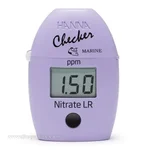
A sensor came out from ams (AS7343) in 2022 that unfortunately has been made EOL, but has a replacement (TCS34488M) with a similar package that might work for future versions.
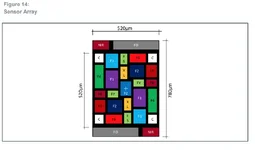
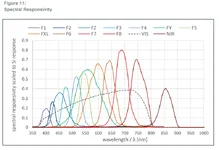
I recently got my hands on a qwic version of the AS7343 sensor from sparkfun, and figured its time to put together something.
Goals:
I figure I'll need 2 light sources (warm white, and IR for reading the phosphate test), but can use the same sensor array across most tests. I can use a small-form ESP32 as the MCU to give it USB-C power, wifi/bt connectivity if needed, and keep it small. Small/cheap ~1.3" OLED screen for displaying results/selecting tests.
Enclosure will be 3d printed.
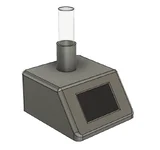
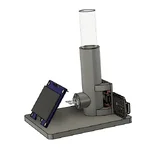
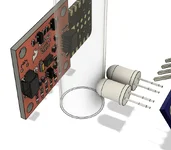
First pass at a sketch - I might drop the screen if I can give the device a web interface though, which will make the device even smaller/cheaper, reduces the need for physical buttons on the unit, and a 2nd pcb entirely. Also not sure if it will need a cover for the top of the vial, or how much ambient light will affect the reads. TBD. Will order some XIAO ESP32S3 to play with and see how far I can take it.
I'll log progress here, and am very open to suggestions and ideas. If successful, I'll release the files so it can be easily replicated.
This is something I've been wanting to do for years, and I think I finally found a sensor that will work. I've always had trouble reading the API tests, and I've always been miffed that the reefers get the cool digital test readers - and wanted to take a crack at building one that could potentially read any freshwater test given a blank/known concentration as a calibration.
A sensor came out from ams (AS7343) in 2022 that unfortunately has been made EOL, but has a replacement (TCS34488M) with a similar package that might work for future versions.
I recently got my hands on a qwic version of the AS7343 sensor from sparkfun, and figured its time to put together something.
Goals:
- As cheap as possible
- Universal as possible
- Fit API glass/plastic vials (not sure yet if the plastic vials will read ok)
- Start with Nitrate/Phosphate and see if I can add more there
I figure I'll need 2 light sources (warm white, and IR for reading the phosphate test), but can use the same sensor array across most tests. I can use a small-form ESP32 as the MCU to give it USB-C power, wifi/bt connectivity if needed, and keep it small. Small/cheap ~1.3" OLED screen for displaying results/selecting tests.
Enclosure will be 3d printed.
First pass at a sketch - I might drop the screen if I can give the device a web interface though, which will make the device even smaller/cheaper, reduces the need for physical buttons on the unit, and a 2nd pcb entirely. Also not sure if it will need a cover for the top of the vial, or how much ambient light will affect the reads. TBD. Will order some XIAO ESP32S3 to play with and see how far I can take it.
I'll log progress here, and am very open to suggestions and ideas. If successful, I'll release the files so it can be easily replicated.
17 Replies
·
420 views