
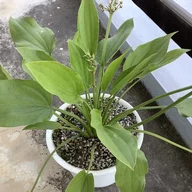


So…today, I want to discuss about this after reading Van Steenis’s Rheophytes of the World.
This is just my understanding of it so, I might make a lot of mistake.
In this book, Van Steenis coined the term “Rheophyte” which means plants growing in fast flowing river. He explained that to be a rheophyte, the plant must have elastic stems, and he also measured drags on the different leaf shapes.
For trees and shrubs it usually look very noticeable with the same leaf shape see: Homonoia riparia, Ficus squamosa, Ficusischnopoda, Ixora salicifolia, Augusta rivularis etc.. For Araceae: most Bucephalandra, Anubias, Homalomena humilis, Many Schismatoglottis species, Ooia, Pipthospatha, lots of Cryptocoryne (lots of it in crispatula group). Other plants: Aponogetonmadagascariensis, Microsorum pteropus, Carex thomsonii etc.
Okay, so there are two types:
1. Facultative Rheophyte: It can grow on land, and in slow flowing water but greatly preferred flowing water habitat.
2. Obligate Rheophyte: Plants that need flowing water to grow e.g. Hydrostachys and Podostemaceae.
In his book, he omitted a lot of aquatic plants however, for example; Vallisneria and Potamogeton not sure why, but I assumed that these are generalist.


